A small laundry folding station needs a stable clean surface for one garment at a time, a place for incoming laundry and a home when the work is done. An existing table or independent folding table can handle those jobs. Choose the location and pack-away routine before buying a permanent counter.
This guide is about folding dry laundry, not building across appliance tops. For the washer zone, use our guide to a small laundry room with a top-loading washer. Plan garments that need to dry first with drying clothes in a small apartment.
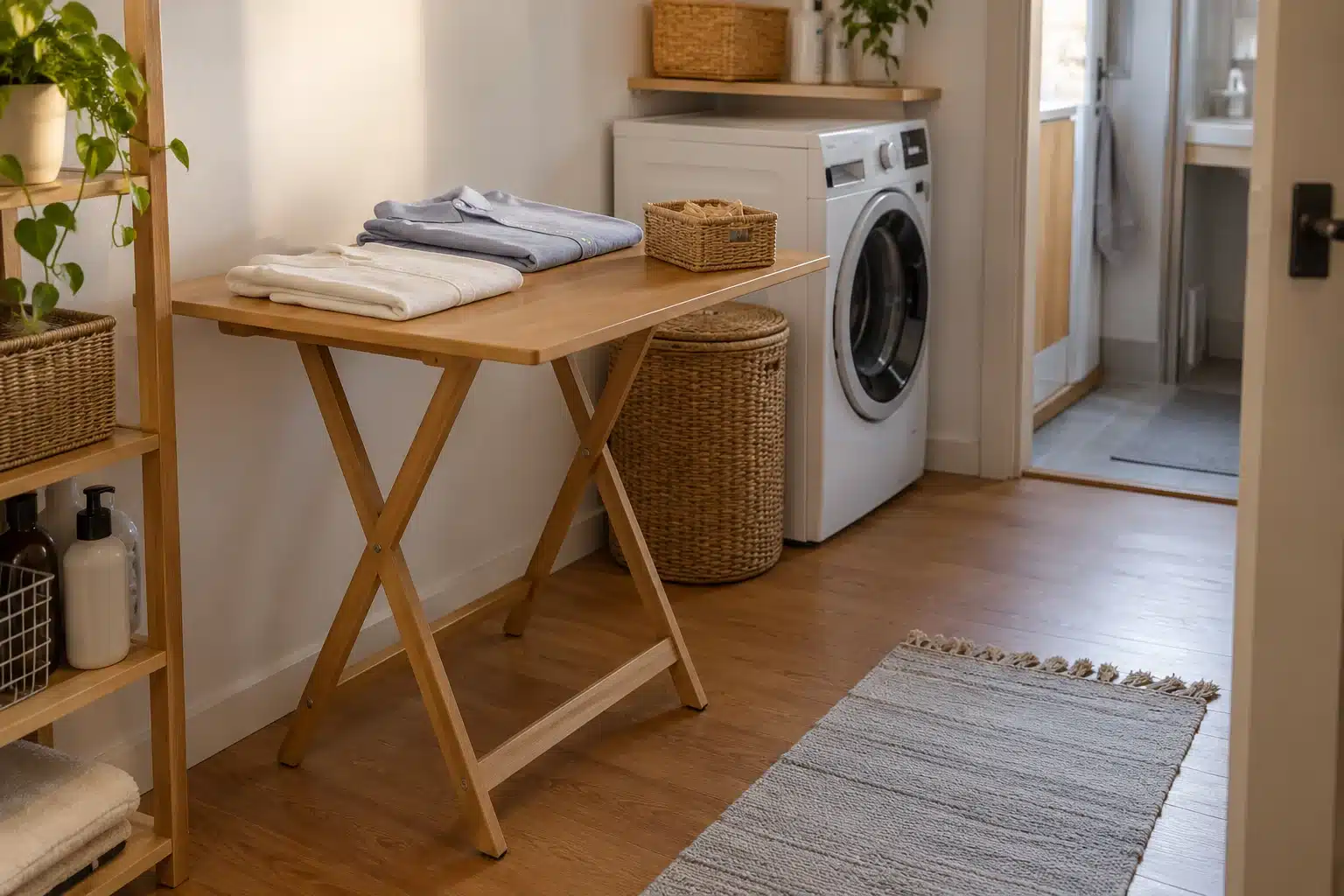
In this guide
1. Choose a location for a small laundry folding station before the table
Where do clean clothes go next? A surface near bedroom storage can shorten the return trip even if the washer is elsewhere. A kitchen or dining table may work after it is cleared and cleaned appropriately. A dedicated table beside the washer is useful only if loading, controls and ordinary movement remain accessible when it is open.
Choose between seated and standing folding based on your comfort. Try an existing surface for a normal load and notice whether you stoop, reach too far or raise your shoulders. The useful height depends on the person and task; a listed table height is a specification, not proof of comfort. Allow room for a chair if sitting is part of the arrangement.
Map the sequence from incoming dry basket to completed stacks and storage. If the whole load has to sit on the work surface, there may be no room to fold. A separate stable basket position can solve that, provided it remains reachable and outside the route. Do not balance a basket on an open appliance door.
Write down the receiving destination before choosing the surface. A small laundry folding station near the bedroom may shorten the putting-away step, while a dining table may offer the easiest trial. Compare both with the incoming basket and your ordinary household schedule, rather than assuming folding has to happen beside the washer.
2. Measure a small laundry folding station in use and in storage
Fold a representative shirt, towel and pair of trousers on your existing table. Notice the largest area needed as you spread and fold each piece. Then mark a proposed smaller surface with paper. A compact table can suit a sequence of individual garments; large sheets may require another method or a larger existing surface on those wash days.
Measure the table’s open footprint, including legs, braces and any projecting handles. Add the space you occupy and the basket position. Check nearby doors and drawers while the mock-up is in place. A tabletop that appears shallow may have splayed legs extending into the route below it.
Record the folded dimensions too: length, width and thickness. Include hinges and feet if they remain proud when stored. Measure the proposed storage opening and your hand space to remove the table. A narrow gap behind a cabinet may technically fit the table but require moving the cabinet to retrieve it, defeating the pack-away plan.
Keep open-use and stored measurements on separate lines. A small laundry folding station must fit while you stand or sit there, with the basket in reach. It also needs a manageable return to storage after the load. Test both movements with an existing surface before comparing a dedicated folding table.
3. Compare temporary folding surfaces
| Option | Best use | Main limit |
|---|---|---|
| Existing dining or work table | Lowest-effort trial of the routine | Needs a reliably clear, clean time slot |
| Independent folding table | Dedicated temporary work surface | Leg lock, stability and stored dimensions |
| Wall-mounted fold-down table | Repeat use at one suitable wall | Wall attachment and open projection |
| Drop-leaf furniture | A surface serving several household tasks | Base remains in the room when closed |
| Rolling table or cart | A level route and suitable parking spot | Top size, wheel locks and full footprint |
Begin with an existing table if clearing it is realistic. A portable folding table earns its storage space when it removes a recurring conflict, such as laundry occupying the dining table during meals. A wall-mounted table avoids storing loose legs but fixes the work position and requires appropriate installation. None of these options provides unlimited surface area.
As an example of specific installation requirements, the IKEA NORBERG table specification lists that version at 74 × 60 centimeters and calls for fixings appropriate to the wall material. It also provides mounting guidance. Treat this as one product example, not a suggested installation height or a universal laundry-table design.
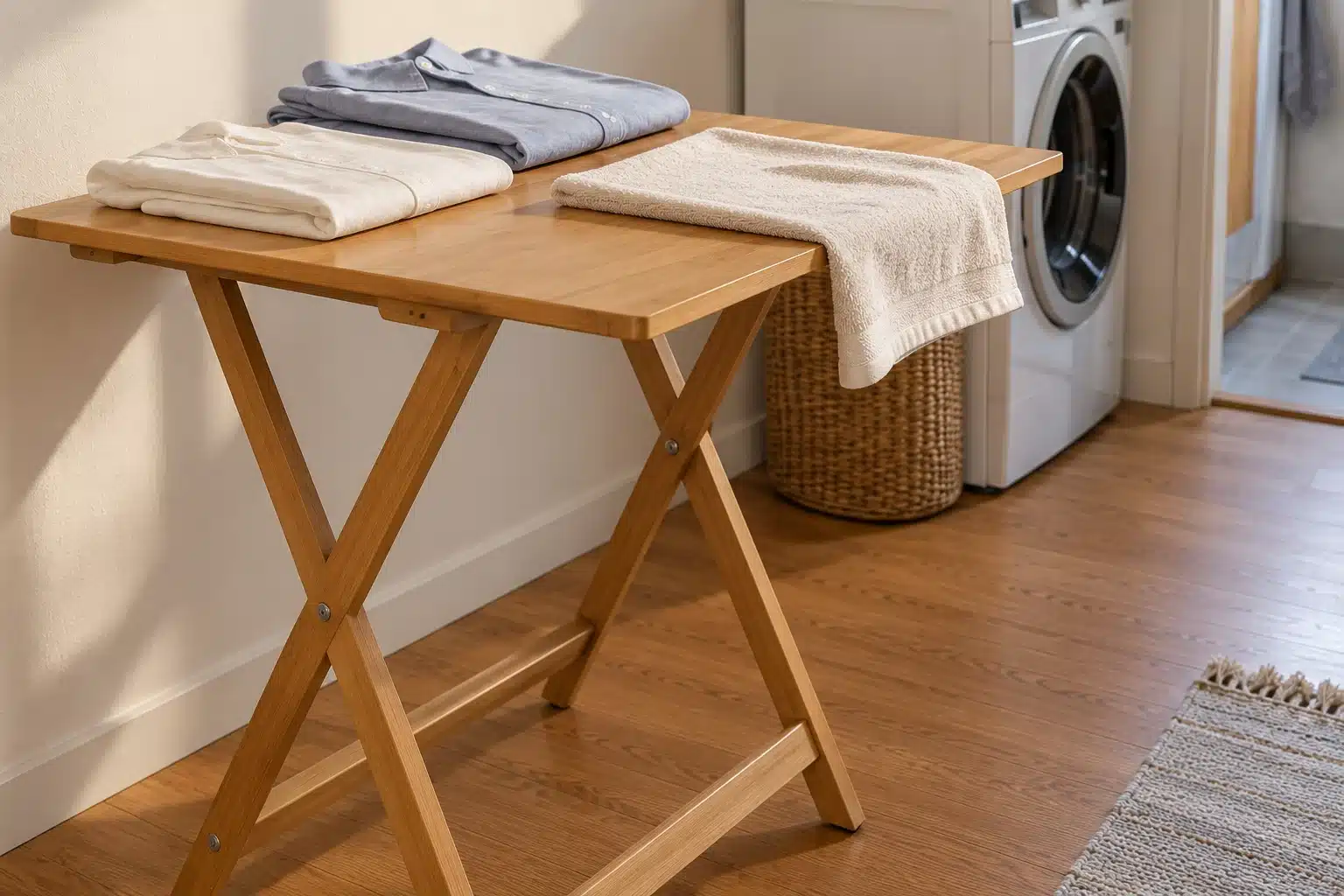
Choose around the task that repeatedly fails. A small laundry folding station can be an existing table if its clean time slot works; a dedicated portable surface may help when meals and laundry compete. A wall-mounted option needs suitable installation and a usable open projection, so compare it as a whole setup.
4. Work through a compact setup example
Imagine a temporary table 30 inches wide and 20 inches deep. These are hypothetical planning dimensions. A shirt may fit while a large towel extends beyond the edge, so test the actual laundry you handle most often. If your method relies on spreading a full sheet flat, this surface will not reproduce the function of a larger dining table.
Suppose the incoming basket takes 16 × 12 inches. Placing it on the 30-inch-wide table consumes over half the width in one orientation. Give the basket a separate stable position if that makes reaching easier and leaves the route usable. Alternatively, transfer a few garments at a time while keeping the remainder within comfortable reach.
Now consider storage. A folded table 31 inches long, 21 inches wide and 3 inches thick needs a location that accepts all three dimensions and a manageable removal motion. A gap only 2 inches wide is unsuitable even if it looks like ideal “dead space.” Check whether the table is designed to stand stored in that orientation; use its intended storage method rather than leaning it precariously.
Test the example with your actual common items. A small laundry folding station sized for shirts may need another method for sheets or large towels. Reserve the top for one working garment and move completed groups when necessary. Give the basket a separate stable position rather than balancing it on a moving appliance part.
5. Organize one load into a repeatable sequence
Bring only completely dry items to the folding station. Garments still damp in seams or waistbands need to finish drying according to their care instructions. Keep the work surface clean and dry. If using a table shared with meals or projects, remove crumbs, tools or residue before placing laundry on it.
Begin with the largest ordinary items, then handle shirts, trousers and smaller garments in manageable groups. The order can change to suit your storage. Keep completed piles short enough to lift without collapsing. If every category needs its own broad stack, move completed groups to their storage locations during the task rather than turning the surface into a crowded display.
Give exceptions one small temporary position: an item needing repair, a missing match or a garment that needs care-label checking. Do not leave these items on the folding station after packing away. Assign their next destination. Otherwise a reusable work surface becomes a permanent holding table for unfinished jobs.
Finish by putting away the last stack, cleaning the surface if needed, returning the empty basket and storing the table. The final step is part of the station’s function. A pack-away table that stays open because it is buried under laundry offers little benefit over a permanent surface.
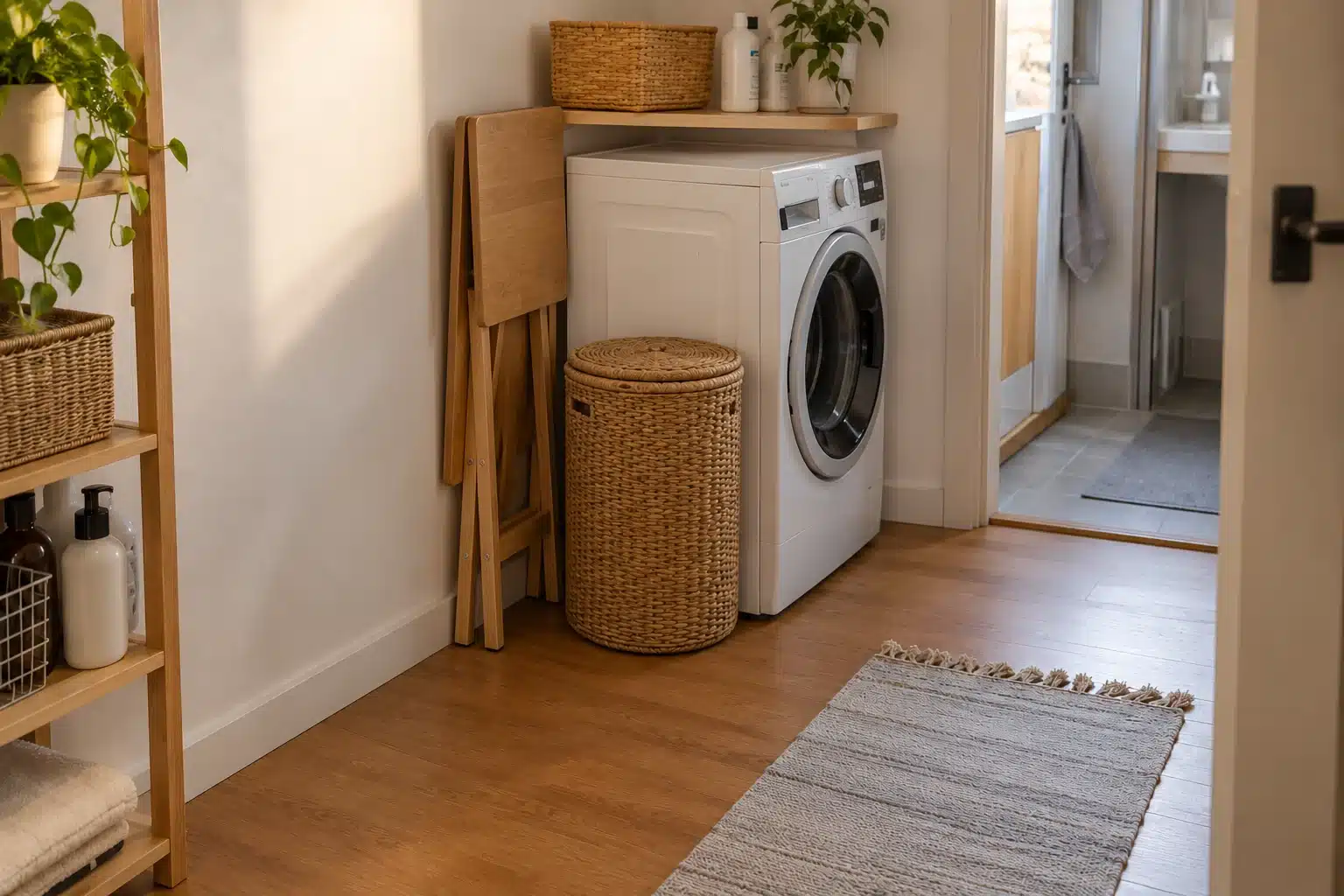
Choose one completion rule that includes putting away. A small laundry folding station can fold down again only after the finished stacks, exceptions and empty basket have destinations. Trial one normal dry load and identify the stage that stalls; a wider table will not fix a receiving drawer that has no room.
6. Check stability, reach and the household route
Set up folding legs and locking mechanisms exactly as instructed, on a suitable level floor. Check the table is stable before placing laundry on it. Keep within the manufacturer’s capacity and intended use. A laundry basket may be heavier than it appears, and leaning on the edge is a different load from a few shirts spread across the top.
For a wheeled surface, follow instructions for wheel locks and placement. A cart that drifts while you fold is not a useful work station. For a wall-mounted leaf, verify that the support mechanism engages and that the wall fixings suit the structure. Obtain rental installation permission where required, and ask for qualified help if wall suitability is unclear.
Keep the operating appliance area available. Do not rest a board on machines as an improvised counter or obstruct a top-loading lid, detergent drawer, air path or service panel. An independent table needs its own support and location. If it only fits across the laundry closet doorway, consider another room where the task can happen without that conflict.
Run the route check with the table occupied by laundry. Objects and a basket can project beyond a bare tabletop. Include other household members and pets in judging whether the temporary location is workable. Do not rely on announcing that a blocked route will be clear “soon”; choose a position that can coexist with ordinary movement.
Check the route with the surface loaded, not just standing empty. A small laundry folding station needs independent stable support and must preserve access to appliance controls, doors and maintenance points. If the only position obstructs the laundry doorway, move the folding task to a suitable surface in another room.
7. Know the limitations before buying
- Confirm usable top size and external leg footprint.
- Measure the fully folded unit, including hinges and feet.
- Check weight, carrying method and the setup mechanism.
- Read load and surface-care guidance for the exact product.
- Trial both seated or standing reach and the incoming basket position.
- Confirm a stored position that is stable and easy to access.
A compact surface handles clothes in stages, so it may require more trips to storage than a large counter. That is an ordinary tradeoff, not a reason to crowd the table with every garment at once. For a household handling bedding, plan an occasional larger surface or another folding method that suits the items.
An ironing board is not automatically a substitute for a stable folding table. Its narrow padded shape and intended use may suit some small items but not your basket or preferred folding motion. If using any existing furniture, check its stability, surface and instructions instead of assuming that a flat-looking object can carry the same loads.
The illustrated arrangements are concepts, not tested products or documented homes. Use their sequence as a planning aid, then measure your own room. A wall that appears empty may contain services or lack suitable fixing points. A photograph cannot confirm wall structure, table capacity or the comfort of a particular height.
Save the model instructions and folded dimensions before ordering. A small laundry folding station should return to a stable storage position you can reach without shifting heavy furniture. Trial the carrying weight and setup mechanism where possible. If retrieval is difficult, change the storage position or use the existing-table routine instead.
A folding worksheet and a shared-table example
| Record for your own room | Your notes |
|---|---|
| Main clothing groups and usual dry-load size | ________________________ |
| Clean table time slot or dedicated task location | ________________________ |
| Largest common garment and folding motion | ________________________ |
| Surface footprint plus legs, braces and handles | ________________________ |
| Standing or seated position and comfortable reach | ________________________ |
| Separate stable basket and completed-stack locations | ________________________ |
| Nearby doors and household movement during use | ________________________ |
| Model support, mounting and load instructions | ________________________ |
| Folded dimensions and stable empty storage home | ________________________ |
Fill in the worksheet using the dry laundry you actually handle. Separate the ordinary clothing load from occasional bedding if they need different folding methods. A folding surface should support a realistic sequence rather than hold every garment at once. Record the table while open, the position you occupy and the stored shape after finishing. Each has a different footprint that matters in a small apartment.
Imagine a renter whose dining table can usually be cleared after a meal, while a portable folding table would need a narrow storage position beside a cabinet. The household wants laundry to leave the sofa sooner. Instead of buying immediately, they trial the dining table with one normal dry load and a separate basket position. They keep the surface clean and remove meal residue before putting clothing there.
The first trial shows that the folding motion works, but finished stacks accumulate until the whole folding surface is covered. The next trial uses shorter groups and returns each completed group to its drawer or wardrobe. This identifies a putting-away bottleneck rather than a table-size problem. A bigger folding table would add occupied floor space without giving those stacks a better destination.
Suppose a second trial reveals a genuine scheduling conflict: another household member needs the dining table before folding can finish. A portable folding table may then be useful if it has a clear open position and a manageable storage route. The renter marks its full footprint, including the legs and their own working position. The open table must coexist with ordinary movement, not rely on everyone avoiding that room.
Next, the renter compares stored dimensions and handling. The folded product must pass the cabinet opening or designated gap without moving heavy furniture. Its carrying weight and locking mechanism need to be manageable for the user. The folding surface may be ideal in use yet unsuitable to retrieve repeatedly. Trial an equivalent shape and read the exact product instructions before treating a narrow visible gap as its permanent home.
Consider seated folding separately. A chair adds its own footprint and changes reach to the incoming basket. Arrange the basket so it is stable and accessible without twisting around the table legs. Completed clothes should leave in manageable groups. The tabletop should support the intended task within its instructions; do not lean heavily on a temporary folding table or use an appliance door as an extra support.
For a wall-mounted option, compare the full open projection, support mechanism, wall structure and installation permission. It can release floor space between uses, but only if the ordinary load finishes and the folding surface closes afterward. Keep the receiving laundry destinations in the plan. If installation suitability is uncertain, an appropriate existing table or independent product provides another route to test before committing to wall hardware.
At the end of the next normal cycle, record one remaining issue: insufficient garment area, an uncomfortable working height, basket reach, crowded completed stacks or awkward pack-away storage. Adjust that part and repeat the ordinary task. Keep exceptions such as repairs in their own small location. A complete folding station ends with clean clothes put away, the basket returned and the folding table or shared surface ready for its next use.
Questions about small laundry folding station
How big does the surface need to be?
Large enough for your common garment and folding motion, plus any objects sharing the surface. Trial your laundry on a marked area of an existing table. Use a separate plan for bulky bedding rather than buying every surface around the largest rare item.
Should it be beside the washer?
Only if that location supports the task and preserves appliance operation. Folding near clothing storage may reduce carrying. Compare the whole dry-laundry sequence before fixing the station in the utility area.
Can I use a dining table?
Yes, when it has a practical clear time slot and a clean, dry surface. Fold a manageable batch and put it away before the table’s next use. If that schedule repeatedly fails, trial a separate temporary surface.
What keeps a folding table from becoming permanent clutter?
Give the empty table an accessible storage home and finish the putting-away step with each load. Keep exceptions elsewhere in defined small categories. The table should be ready to fold after the last ordinary garment leaves it.