By Emma Reed · Little Room Lab editorial team
Small Bathroom · Renter-Friendly
Good small bathroom storage ideas begin with the space you can actually use, not a picture of a vanity you do not have. A pedestal sink, shallow basin, or wall-mounted sink can leave you with nowhere to put a toothbrush, spare towel, or replacement shampoo. Adding a large organizer may solve the bottle problem while creating a door problem.
The goal of small bathroom storage is to give everyday items a convenient home, keep wet and dry storage separate, and leave room to use the fixtures. These ten cabinet-free options cover different constraints. Choose one main storage location and one supporting solution rather than squeezing every idea into the same bathroom.
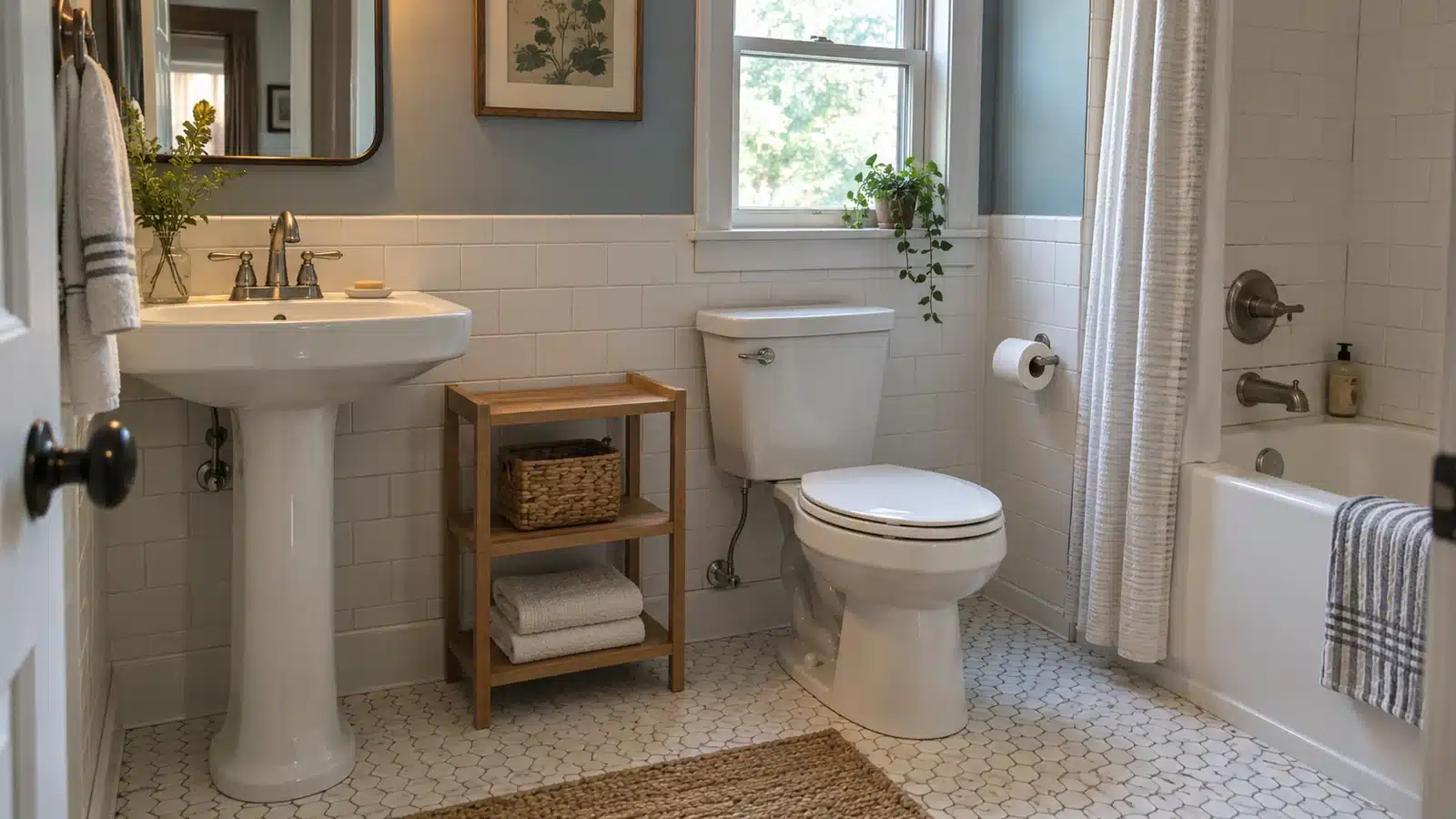
Choose small bathroom storage by the space you have
| Your constraint | Try first | Check before committing |
|---|---|---|
| No counter or cabinet | A cart in a dry corner | Door swing, walking route, and cleaning access |
| Pedestal sink with awkward space below | A compatible pedestal organizer | Sink shape, plumbing access, and actual usable shelves |
| No spare floor area | A door organizer | Door thickness, frame clearance, and closure |
| Permission to install storage | A shallow wall shelf | Mounting instructions and access around fixtures |
| Bathroom is already crowded | Backstock outside the room | A convenient dry location for replacements |
In this guide
Measure small bathroom storage while the room is in use
Measure small bathroom storage with the door fully open, the shower curtain or enclosure in its usual position, and the items you normally leave on the floor. Walk from the entrance to the sink, toilet, and shower. Notice where your body needs space to turn, bend, or reach. An empty rectangle beside a toilet is not automatically an available shelf location.
Measure the narrowest usable width, depth, and height of each candidate spot. Include baseboards, pipes, outlets, radiator edges, and towel bars. For an organizer under a sink, measure the sink and pedestal separately; a product’s outside dimensions do not reveal how much room remains around your plumbing.
In a bathroom without cabinets, mock up the proposed footprint with a flattened cardboard box. Use it only as a planning aid, then remove it. Open the door, sit down, reach for a towel, and pretend to clean the floor. If you have to sidestep the mock-up every time, choose a different location rather than a slightly prettier organizer.
Also identify the genuinely dry areas. Persistent dampness needs attention before storage. The EPA’s moisture guidance recommends bathroom ventilation and prompt reporting of leaks by renters. Do not cover a damp patch with a cabinet or pack towels against it.
Small bathroom storage: a cabinet-free planning worksheet
Copy this table or print the page. Use one measurement unit throughout. Write what fits your room; these blanks are not suggested minimum clearances.
| Planning field | Your notes |
|---|---|
| Candidate dry storage location | ____________________________ |
| Usable width × depth × height | ____________________________ |
| Door, drawer, or lid movement nearby | ____________________________ |
| Pipes, outlets, and fixture access to preserve | ____________________________ |
| Daily items that must fit | ____________________________ |
| Items that can live outside the bathroom | ____________________________ |
| Mounting permission and product instructions | ____________________________ |
| How you will remove storage for cleaning | ____________________________ |
10 small bathroom storage ideas without cabinets
1. Give an existing ledge one compact daily-use tray
If the sink has a usable side ledge, a small washable tray can collect the handful of items used every morning. Group a toothbrush holder, face wash, and one other essential rather than lining bottles around the basin. The tray creates a defined limit and makes clearing the surface for cleaning more straightforward.
Choose the tray around the ledge, not the other way around. It should sit completely supported without hanging into the basin or blocking a faucet handle. A pedestal sink with no flat landing does not qualify; skip this idea rather than balancing a tray on a curved edge.
Best for: a room with a little surface space but no drawer. Trade-off: everything remains visible, so reserve it for the smallest daily group.
2. Put a small cart in a dry, reachable corner
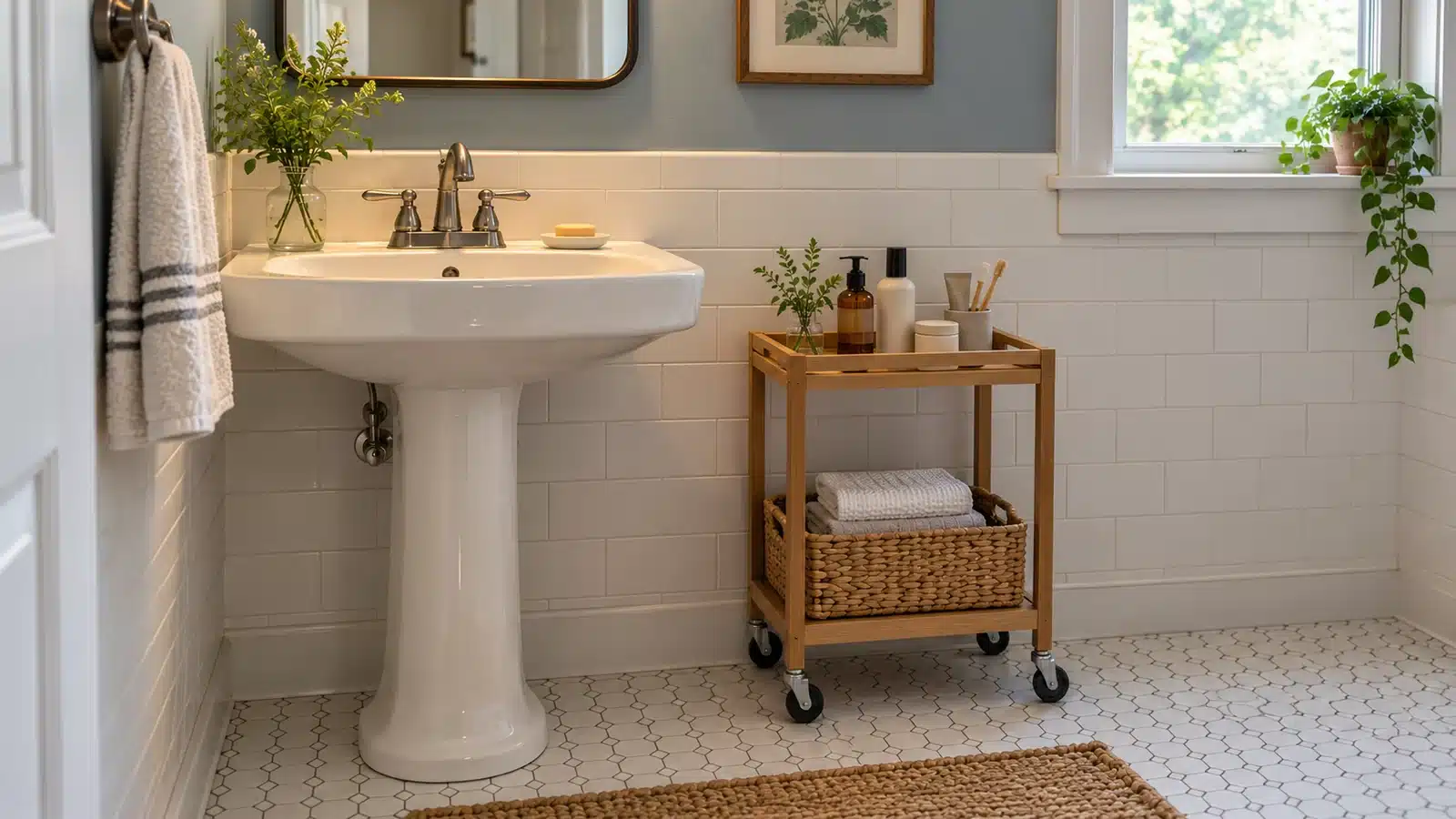
A cart can provide small bathroom storage for daily products at a convenient level, spare washcloths below, and a modest replacement supply on the bottom. Open sides help you see when a shelf is becoming crowded. Select shelf spacing for your tallest actual bottle and bins that can be lifted out without tilting everything.
Position it outside the shower splash area and away from the door sweep. Check the cart with its shelves loaded according to the maker’s instructions; an empty cart does not tell you how convenient retrieval will be. Wheels are useful only if there is somewhere to roll it when cleaning.
Best for: a spare corner beside a sink. Trade-off: it uses floor area and can become a catchall unless each shelf has a clear job.
3. Choose an organizer made for your pedestal’s shape
A purpose-built pedestal organizer can provide small bathroom storage in some of the curved space beneath a sink. Look beyond the attractive front view: compare the opening around the pedestal, the position of shelves, and whether a hand can reach stored items once the unit is in place. Some designs work better for washcloths than tall bottles.
Keep plumbing visible and accessible for inspection or maintenance. Do not attach an improvised shelf to the pedestal or use the sink itself as structural support. If fitting the organizer requires squeezing it against pipes, the match is wrong.
Best for: a compatible pedestal with unused space around its base. Trade-off: the internal storage is usually less generous than the outside footprint suggests, and cleaning around it takes planning.
4. Use a low shelf for folded towels and removable bins
A short freestanding shelf offers small bathroom storage for towels and toiletries without turning every wall into a display. Put a small stack of clean towels on one shelf and use another for a removable personal-care bin. Leave some empty space so you can lift the bin instead of dragging it past crowded bottles.
Choose a unit appropriate for the location and install any required restraints. Freestanding does not mean exempt from the manufacturer’s installation instructions. The CPSC’s Anchor It guidance explains why furniture tip-over prevention matters. If the necessary installation is not allowed in your rental, choose a different product rather than omitting it.
Best for: an unobstructed dry wall. Trade-off: open shelves need limits to stay useful.
5. Add one shallow wall shelf where installation is allowed
Wall-mounted small bathroom storage can hold a few everyday items while keeping the floor available. Choose a position you can reach without leaning across a toilet or stretching over a hot appliance. A shelf beside the mirror may be more convenient than one high above it, provided it does not collide with your shoulder or the door.
Get permission where needed and follow the shelf’s mounting instructions for the actual wall. The storage capacity is determined by the complete installed system, not just the board. Keep heavy bottles in a more accessible location instead of treating a decorative ledge as a pantry.
Best for: a bathroom with suitable wall space. Trade-off: installation and eventual removal are more involved than moving a cart.
6. Give the back of the door a light, specific job
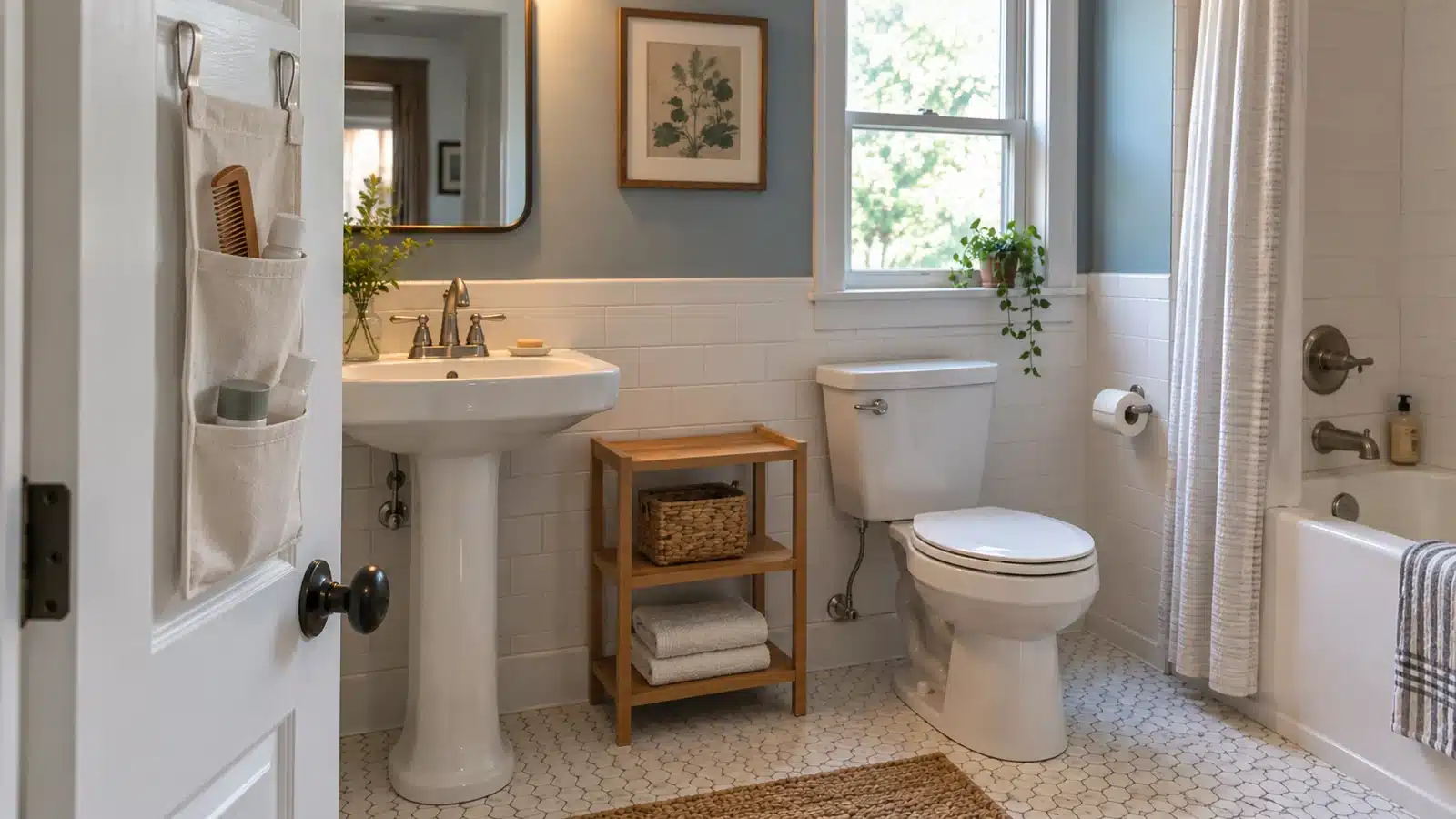
For small bathroom storage on a compatible door, choose small grooming items or clean washcloths when the floor is full. Choose a design that keeps pockets accessible and does not stretch across the handle. A few shallow pockets are often more useful than a bulky organizer filled with every product you own.
Check the door thickness, the gap at the frame, and the available space when the door opens. Test that it closes and latches normally before filling the organizer. Do not use it on a door where it obstructs required operation, and follow the product’s attachment and loading instructions.
Best for: a compatible door with unused interior space. Trade-off: you need to close or reposition the door to reach some pockets.
7. Move towels off surfaces with suitable hooks
Hanging a towel can release small bathroom storage on a shelf for things that cannot hang. Place hooks where each person can reach them and where hanging towels will not cover switches, trail into the sink, or brush the toilet. Spread the towels rather than layering several damp ones on a single crowded point.
For removable adhesive products, use a bathroom-appropriate product and follow its exact surface, preparation, loading, and removal instructions. Command’s bathroom instructions, for example, exclude several rough or textured surfaces and warn that incorrect use can cause damage. “Removable” is not a promise that every rental finish is suitable.
Best for: moving towels out of a pile. Trade-off: towels still need space around them, so hooks do not create unlimited capacity.
8. Keep shower products in a compatible draining caddy
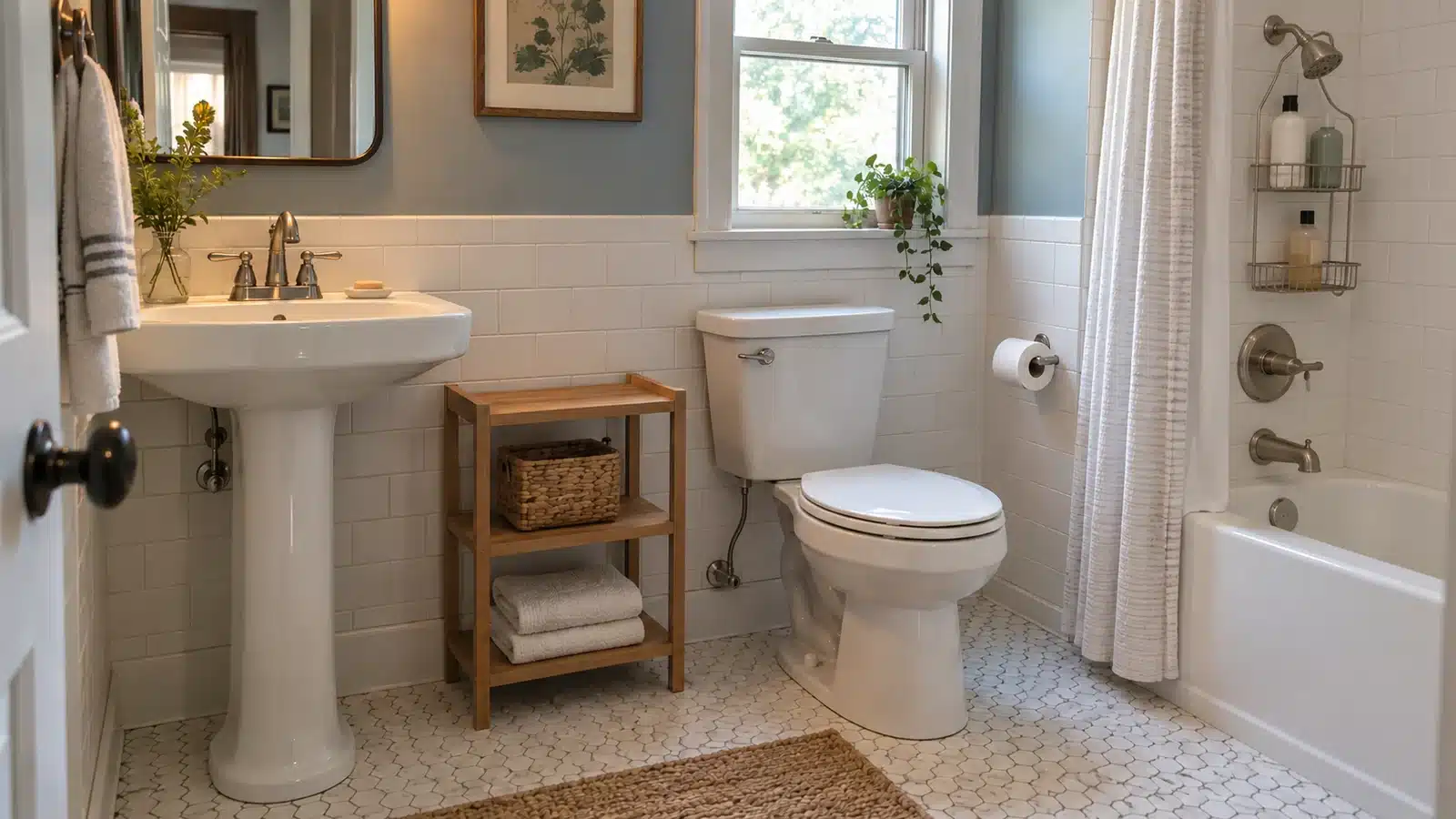
Shampoo and body wash belong where you use them, rather than on the bathroom’s only dry shelf. A caddy with drainage can group the current bottles without surrounding the tub edge. Pick the attachment method around your shower’s actual fixtures and surfaces; different hanging, tension, and adhesive products have different requirements.
Make sure the caddy does not interfere with shower controls, the enclosure, or comfortable movement. Keep it to in-use products, and remove empty containers. Take the caddy out or detach the baskets as instructed so you can clean the surfaces behind them.
Best for: reducing bottle clutter on a shower floor or tub rim. Trade-off: it is wet-zone storage, not a place for spare paper products, clean linens, or everything from your morning routine.
9. Consider an over-toilet frame only after checking access
An over-toilet unit can store a modest group of spare supplies above an otherwise unused footprint. It works only when the frame fits around the toilet, does not prevent tank-lid removal, and leaves the controls and nearby plumbing accessible. Measure the real fixture rather than assuming all toilets share the same shape.
Follow the unit’s assembly and anchoring instructions. Put frequently used items where you can retrieve them without an awkward reach, and avoid a crowded shelf directly over your head. Check how you will clean behind the frame before choosing one.
Best for: a compatible toilet alcove with suitable installation conditions. Trade-off: it makes a small room visually busier and may complicate maintenance.
10. Create a bathroom backstock shelf outside the room
A nearby closet shelf or dry bin can support small bathroom storage by holding unopened shampoo, extra toilet paper, and spare towels. The bathroom then needs space for the current supplies, not the entire household inventory. Group replacements together so refilling does not turn into a search across several cupboards.
For a shared home, give each person a small portable kit for products that do not need to stay beside the sink. Return the kit to its own shelf after use. Store cleaning products and other potentially harmful items according to their labels and household safety needs, not wherever a basket happens to fit.
Best for: the smallest rooms and no-installation rentals. Trade-off: you make a short trip to refill, but avoid permanent crowding.
Build a small bathroom system around three groups
Divide small bathroom storage into daily dry items, in-use shower items, and replacements. Give each group its own location. This keeps a damp shower bottle from living beside clean hand towels and stops a family-size refill from occupying your only accessible shelf.
For two people, divide small bathroom storage by person and keep shared products in a separate spot. You do not need matching containers to make the division clear. A small tray and a removable bin can be enough. Before buying more storage, check whether your current arrangement still contains products nobody uses.
Give each possible location a quick pass or fail: daily items come out easily; the door and fixtures operate normally; the contents suit the wet or dry conditions; and you can clean behind the organizer. Compare only locations that pass all four checks. This prevents a narrow unit from winning on width while failing in ordinary use.
Try the arrangement through normal mornings and cleaning. Note the item you keep setting down somewhere else. That is a useful clue: the storage may be inconvenient, too full, or simply on the wrong side of the room.
Check small bathroom storage for supplies and cleaning access
Before filling small bathroom storage, lay out the items that actually belong in the bathroom. Separate current products from unopened replacements, personal items from shared items, and shower products from supplies that need a dry home. This inventory makes it easier to choose storage around real containers rather than buying attractive baskets and finding uses afterward.
| Group | Current items | Planned location |
|---|---|---|
| Daily dry grooming items | ________________ | ________________ |
| In-use shower products | ________________ | ________________ |
| Clean towels and washcloths | ________________ | ________________ |
| Unopened replacements | ________________ | ________________ |
| Cleaning products stored as their labels require | ________________ | ________________ |
Check small bathroom storage retrieval with the containers filled as you normally use them. Can the tallest bottle come out without tilting everything in front? Does a removable bin still lift past the shelf above? Can each person find their daily kit without shifting the shared supplies? A shelf full of tightly fitted objects may have capacity but little useful access.
Next, rehearse cleaning around small bathroom storage without moving fixtures or dismantling the organizer. Remove a tray, lift out a bin, or move a cart only as its instructions permit. Check whether you can reach the floor beneath and behind it, the sink edges, and the surfaces where splashes collect. A permanently packed corner can make ordinary upkeep more complicated.
Check small bathroom storage for maintenance access separately. An organizer should not hide a plumbing connection, trap the toilet tank lid, or prevent the door from operating normally. Keep access that your fixtures and installed products require. If reaching a connection means disassembling the organizer, reconsider that location before filling it.
Keep the current bottle in its daily small bathroom storage position and unopened replacements in their assigned dry location. Replace the empty container rather than adding another beside it; this preserves the planned space and makes shortages easier to notice.
Common small bathroom storage mistakes without cabinets
- Filling every gap: preserve room to move and clean, not just room to store.
- Buying before measuring: include handles, door movement, and plumbing in your checks.
- Using wet-zone storage for dry supplies: keep spare paper and clean linens away from persistent splash.
- Ignoring installation: a rental-friendly label does not replace product instructions or permission.
- Keeping too much backstock inside: relocate unopened supplies before adding another organizer.
Frequently asked questions
How do I organize a pedestal sink bathroom?
Begin beside the sink rather than automatically below it. A dry-corner cart, suitable wall shelf, or outside personal kit may be easier to use than a tight pedestal organizer. Choose the under-sink option only when it fits your sink and leaves plumbing accessible.
What if I cannot drill or use adhesive hooks?
Use an appropriately installed freestanding option, a compatible door organizer, or storage outside the room. If a freestanding product requires anchoring that you cannot do, choose another solution.
Should towels be stored on open shelves?
A small clean stack can work in a dry location. Avoid cramming towels against damp surfaces, and keep in-use wet towels separate. Choose the storage amount around how often you replace and wash them.
Which organizer should I buy first?
Choose small bathroom storage for the biggest unsolved daily problem. If toiletries cover the sink, solve their location first. If the floor is full of towels, move towels to suitable hooks before adding another floor unit.