By Emma Reed · Little Room Lab editorial team
SMALL BEDROOM & CLOSET STORAGE
A small closet can have plenty of shelf space and still be frustrating every morning. Shirts hide behind coats, folded clothes collapse into a single pile, and the shoes you wear most end up under everything else. Usually, the first fix is not a bigger organizer. It is giving different kinds of belongings different places.
These small closet layout ideas focus on ordinary reach-in closets, including rentals with a fixed rod and top shelf. Start with the layout that suits your clothes, then add only the pieces that solve a specific problem. A useful small closet should be easy to put things back into, not merely impressive with the doors open.
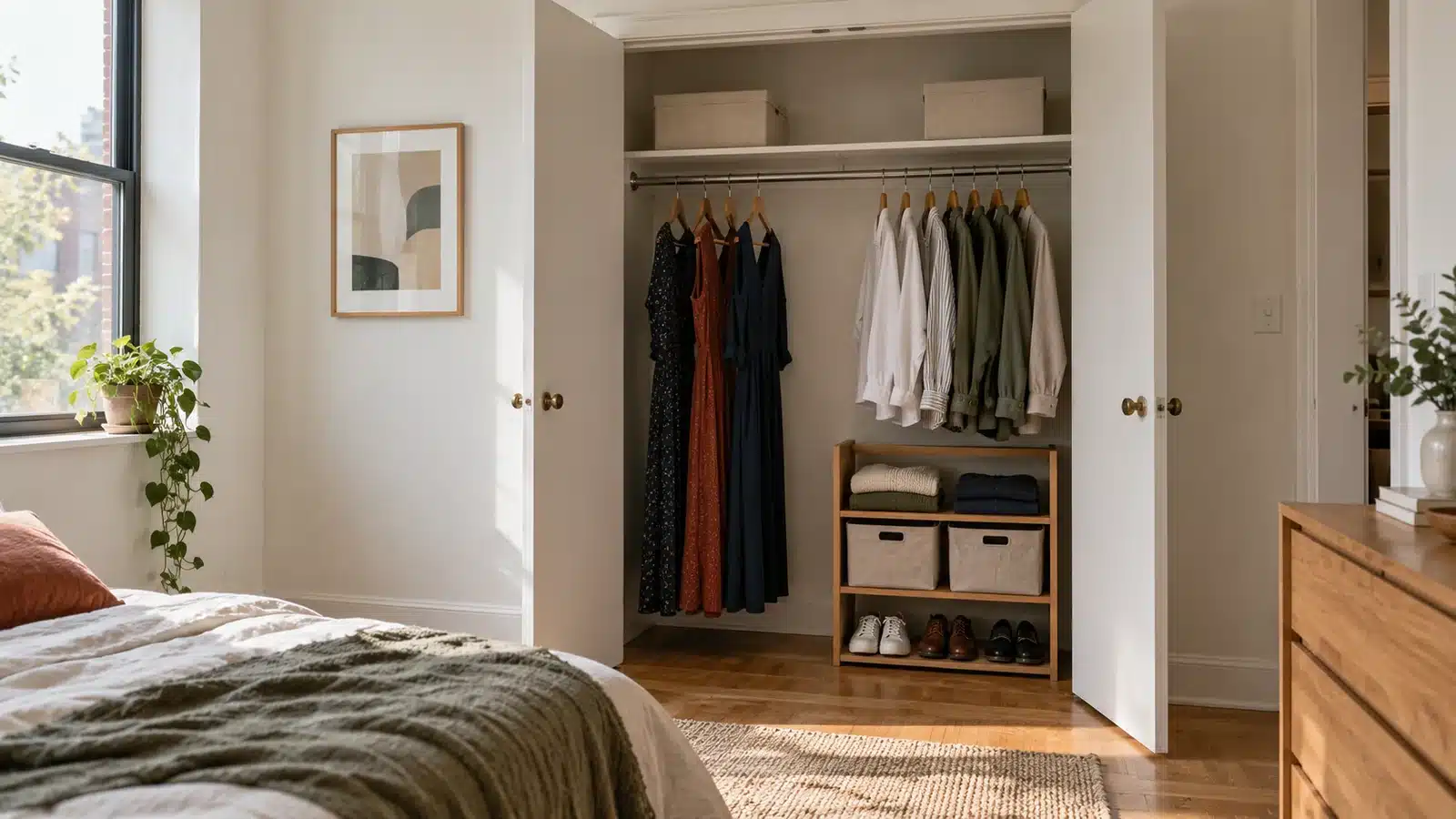
Choose the starting layout before you buy an organizer
| Your closet needs | Start with | What must fit |
|---|---|---|
| Long hanging without new hardware | Single rod with a partial floor zone | Clear space below garment hems |
| More short hanging, plus a few long pieces | Split long hanging and double hanging | Two short-garment rows and suitable supports |
| More folded clothing than hanging | Shelf column beside a rod | Bin or drawer access through the opening |
| Two people’s wardrobes | Side-by-side personal bays | Each person’s hanging and folded allocation |
| A sliding panel blocks part of the opening | Opening-aligned storage bays | Each organizer behind an accessible opening |
Choose by the awkward moment you want to remove: a coat touching the floor, a drawer trapped behind a door, or a sweater hidden beneath another pile. Seasonal rotation is useful, but it is a routine, not another physical layout.
In this guide
Measure your small closet, not just its width
Write down the interior width, depth, and height. Then measure the opening you actually reach through. Sliding and bifold doors can make a portion of the interior awkward to access, even when the full closet looks generous on paper. Note baseboards, door tracks, pipes, and anything that stops a shelf or drawer from sitting where you expect.
IKEA’s clothes-storage planning guide recommends measuring all dimensions and checking obstructions and door movement before selecting a system. Treat product dimensions as a starting point: a drawer also needs room to open, and a bin needs enough space to lift or slide out.
Next, sort your wardrobe into long hanging, short hanging, folded clothing, shoes, and small accessories. Include laundry that will return to the closet. Otherwise, an arrangement that fits on laundry day may overflow by the weekend.
Use your own longest dress, widest pair of shoes, and largest folded sweater to check proposed spaces. This is more useful than assuming a standard garment will match yours. Photograph the empty closet and sketch zones on the image. Keep the drawing simple; you are deciding what goes where, not designing a custom cabinet.
Your small closet measuring worksheet
Copy these fields into your notes or print the guide. Choose one measurement unit and use it consistently. The blanks are for your own closet; they are not recommended minimums.
| Measurement or check | Your result |
|---|---|
| Interior width, depth and height | ________________________ |
| Clear opening with each door in position | ________________________ |
| Space beneath existing rod and top shelf | ________________________ |
| Longest hanging garment and widest hanger | ________________________ |
| Largest shoe pair or folded-clothing bin | ________________________ |
| Drawer or bin space when pulled forward | ________________________ |
| Baseboards, tracks and other obstructions | ________________________ |
| Hardware instructions and lease permissions | ________________________ |
5 small closet layout ideas for a reach-in closet
1. Single rod with a partial floor-storage zone
Best for: fixed rental hardware and a wardrobe containing several long pieces.
Keep the existing rod across the small closet. Long garments occupy one end with open space beneath them; short clothing occupies the other end above a low shoe rack or organizer. This uses a single hanging level and only the floor area that remains genuinely available.
Keep frequent-use pieces near the opening. On the top shelf, use separate bins for occasional accessories. A single rod is not wasted space if your wardrobe needs long hanging. Check the longest garment before deciding where the floor storage stops.
The trade-off: this arrangement preserves long hanging but does not create a second row for shirts. A hanging fabric shelf also takes away some rod width, so count the clothes it would displace.
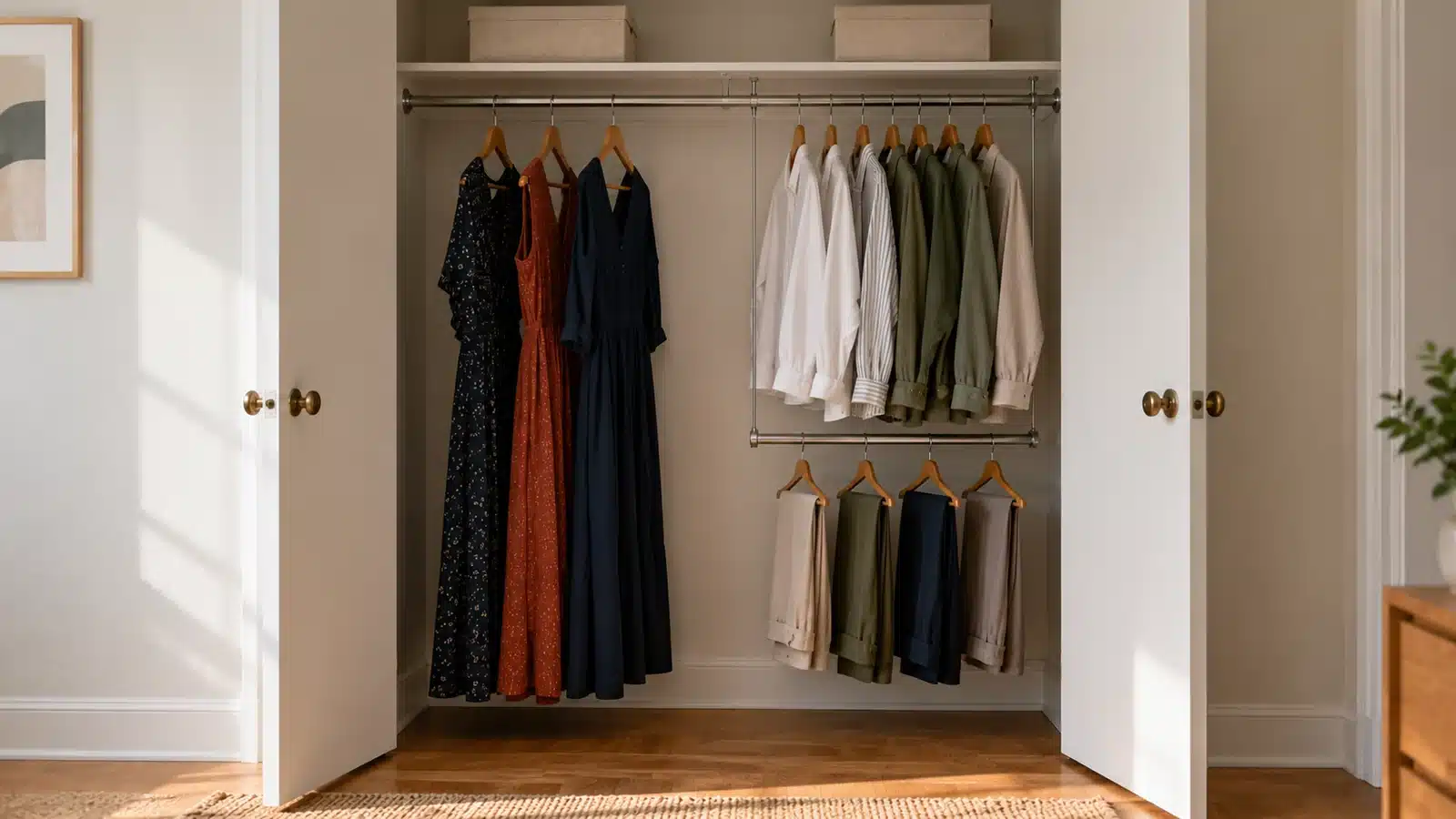
2. Long hanging on one side, double hanging on the other
Best for: mostly shirts, jackets and folded-over pants, with a few dresses or coats.
Reserve one full-height section for long garments. Divide the other section into upper and lower hanging rows. Unlike the single-rod layout, this creates a second clothing level rather than using the lower section for bins.
A suspended add-on rod suits some existing closets, but compatibility matters. Check its instructions and the existing rod’s installation before adding weight. Hold your actual garments in the proposed positions: upper hems should not crowd the lower hangers, and lower hems should stay clear of the floor.
The trade-off: short hanging expands while folded storage shrinks. If the upper row is uncomfortable to reach or the supports are unsuitable, use a lower organizer instead.
3. Shelf column beside a hanging zone
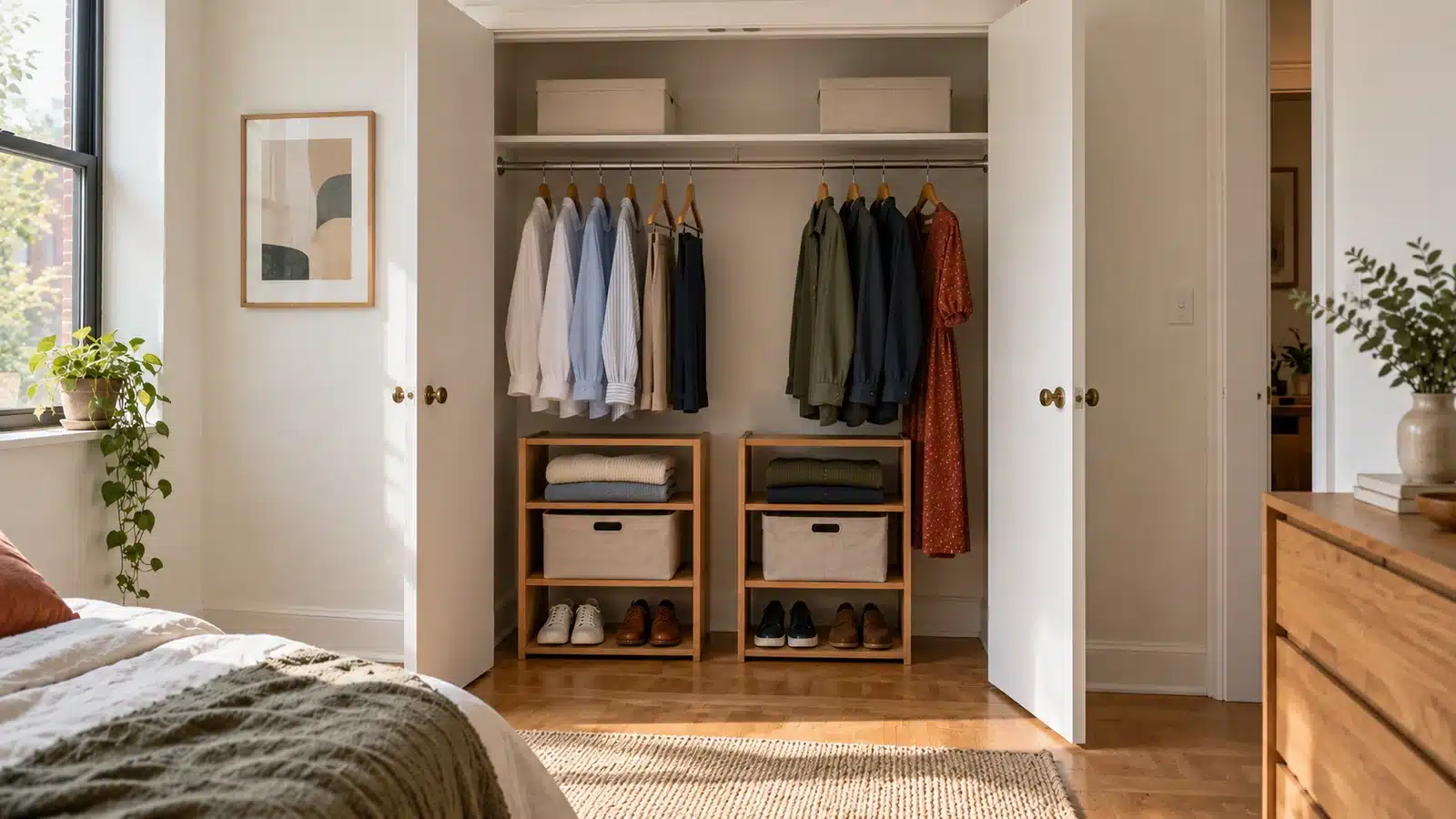
Best for: a wardrobe heavy on T-shirts, jeans and knitwear.
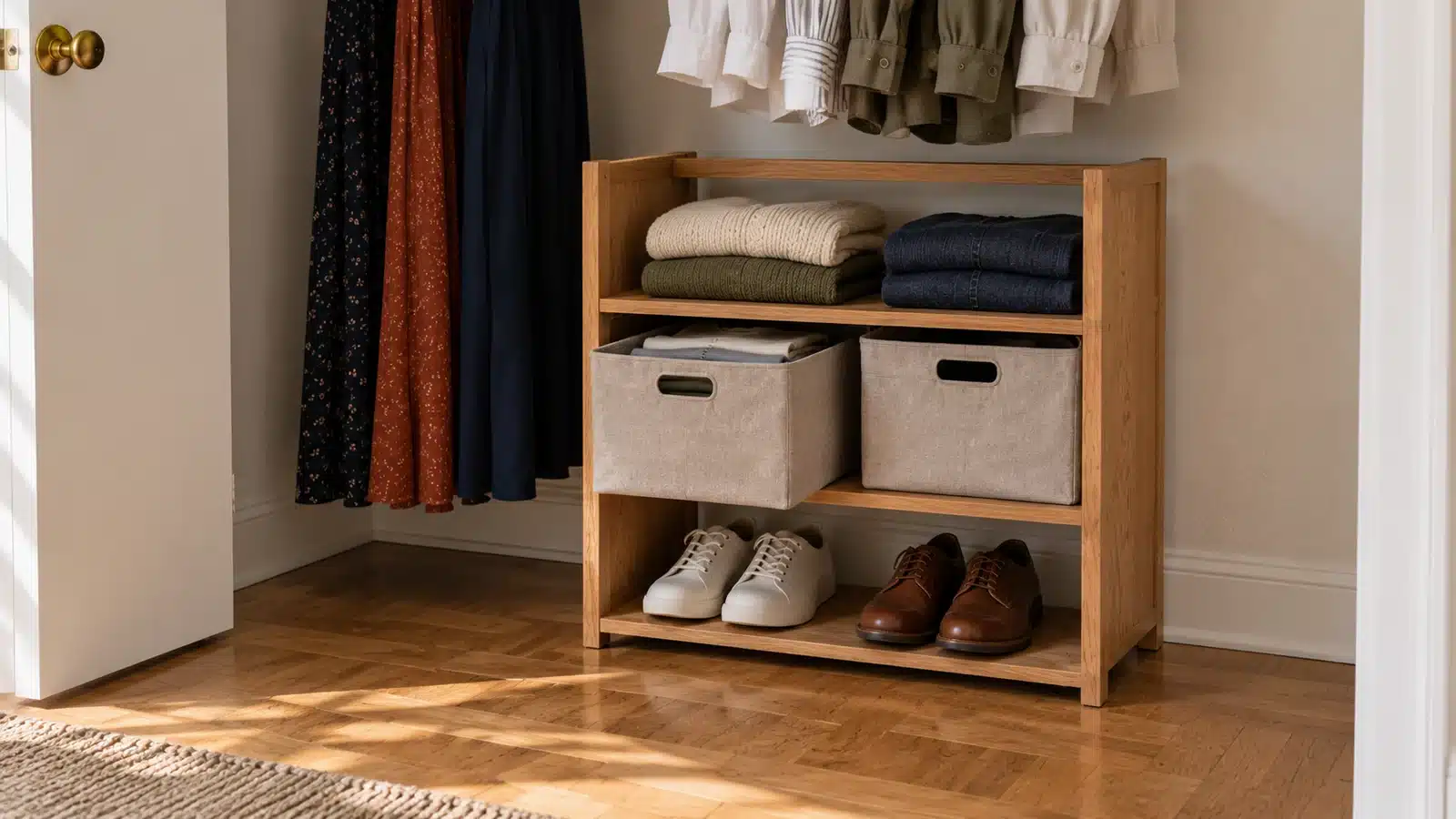
Put a suitable shelf or drawer organizer at one end of the closet and reserve the remaining width for hanging. This gives folded clothing a vertical column instead of treating the whole closet floor as one storage shelf. Open shelves suit short stacks; drawers can contain socks and workout clothing.
Make each shelf responsible for one category. Keep heavier belongings lower and follow the unit’s installation instructions. If a deep compartment hides small items, use a removable bin only after checking that it can come forward through the door opening.
The trade-off: a shelf column takes hanging width. Before buying it, shift your hangers into the proposed remaining area and check whether they still move freely.
4. Side-by-side personal bays for a shared closet
Best for: two people whose belongings keep crossing into each other’s storage.
Give each person a vertical bay with hanging above and a separate folded-clothing or shoe zone below. A shared top shelf can hold bedding or seasonal bins. The bays do not need equal width: work uniforms may need more hanging, while knitwear needs more shelves.
A physical divider, separate organizers or a clear boundary between hanging sections makes the arrangement legible. Use what the closet and permissions allow rather than adding a divider merely for symmetry. Both people should be able to put laundry away without moving the other’s belongings.
The trade-off: two personal systems can consume more space than one shared organizer. Allocate by wardrobe size and access needs, not a perfectly centered split.
5. Storage bays aligned with sliding-door openings
Best for: a small closet where a sliding panel always covers part of the interior.
Move the doors to each normal position and identify the exposed opening. Position separate narrow storage bays behind those openings rather than centering one wide drawer unit across them. Keep drawers and pull-out bins inside an opening they can actually pass through. This is an access-led arrangement, not simply the same closet with different bin labels.
Keep frequently used categories toward the front of each bay. At an awkward end, test a removable box before choosing a bin. If retrieving it requires moving several objects, change the arrangement.
The trade-off: the doors prevent seeing everything at once. A narrower organizer with reliable access may be more useful than a wider unit that technically fits the interior.
Small closet doors: test the actual opening
A common two-panel bypass door reveals one side at a time. The concept below shows why two opening-aligned organizers can be easier to use than one drawer crossing the center. Your door arrangement may differ, so check the real opening rather than copying the proportions.
Doors slid to the right
Accessible storage bay
Right bay covered
Doors slid to the left
Left bay covered
Accessible storage bay
Measure the clear opening with the panels in position. Then compare it with the drawer or bin as it moves forward, including handles and anything that projects at the sides. Use a cardboard box to rehearse retrieval. Keep central storage simple if neither door position reveals enough space for a wide pull-out.
Two routines that support any layout
Keep current clothing separate from seasonal clothing
Put everyday pieces in the easiest positions. Use labeled shelf bins for clean, dry seasonal clothing and occasional accessories, following garment care instructions. Specific labels such as “summer tops” work better than “miscellaneous.” Keep the bins retrievable; seasonal storage should not turn into a permanent forgotten collection.
Move a complete category, not a loose pile
If clothes, bedding, bags and every shoe cannot coexist, choose one category to store elsewhere. Spare bedding might suit an appropriate under-bed container; occasional shoes could have a separate bedroom zone. Give that category one named home. Moving rarely used belongings is less disruptive than relocating the clothes you need each morning.
Set up the closet in a sensible order
- Empty and sort. Remove belongings that should live elsewhere. Keep a realistic wardrobe for your actual routine.
- Assign hanging zones. Hang long garments first, then position short garments around them.
- Test the floor area. Use an existing box or small organizer to check reach and door access.
- Contain folded categories. Choose a few containers that suit the shelves instead of filling every inch with matching bins.
- Label the occasional items. Put seasonal and spare items away only after daily clothing has a workable home.
- Review after laundry. If clean clothes no longer fit, change the allocation before buying another organizer.
Renting does not make every freestanding unit exempt from anchoring. Follow the manufacturer’s directions for any shelving or furniture you add. The CPSC’s Anchor It! guidance explains why furniture restraints matter. If required anchoring conflicts with your lease, discuss permission or choose a different arrangement; do not replace an anti-tip restraint with an adhesive hook.
For light accessories on compatible surfaces, check the exact hook instructions. Command’s product guidance says surface suitability and weight limits vary by product. “No drill” is not a universal guarantee that a wall finish will remain unchanged.
What to change when the first closet layout still feels awkward
Try the new small closet arrangement through a normal clothing cycle before adding another organizer. Identify the action that still takes too much effort, adjust one zone, then check it after clean laundry returns.
Clean shirts fit, but returning them is a struggle
In a small closet, check how many hangers must move before you can insert one shirt. A tightly packed hanging zone can technically hold the wardrobe while making daily use frustrating. Move an occasional category elsewhere or reconsider the width allocated to folded clothing. Slim hangers cannot compensate for a small closet that is being asked to hold clothing you no longer use.
The lower organizer hides behind hanging clothes
Check the actual garment hems above the lower organizer in your small closet. Move short pieces into that section, or shift the organizer toward the opening where you can see its contents. Keep long clothing in a genuinely clear hanging bay. If reaching a bin means lifting several garments every time, that bin is not in a useful daily position.
A shared shelf is always mixed up
Separate ownership from storage type. One person’s folded shirts can have a different-sized zone from the other’s sweaters, while both still share an occasional bedding shelf. Name the shelf’s purpose together. In a small closet, a clear division often works better than two identical containers chosen before the belongings were sorted.
The arrangement works until laundry day
Include the clothing currently being washed before judging capacity. Leave one reachable return point for clean items, then put them into their assigned zones instead of leaving a permanent basket in front of the shelves. If the wardrobe still overwhelms the small closet, move a complete occasional category to a planned secondary home. Adding more dividers to the same crowded shelf will not create a usable retrieval route.
After each adjustment, open the doors and retrieve the same few everyday items. Keep the change that makes returning them easier. The best result is a small closet you can use without a sequence of temporary piles, not one that stays perfect only while everything is freshly arranged.
Common small closet mistakes
- Filling the space before sorting. Organizers cannot decide which belongings belong in the closet.
- Using identical bins for every category. Socks, boots, and sweaters have different access needs.
- Forgetting the doors. A drawer that fits the closet can still be unusable behind a sliding panel.
- Choosing a layout for a photograph. Leave room for the real wardrobe, including laundry and imperfect folds.
- Making daily access a climbing task. Put occasional items high, not the clothes you need each morning.
- Assuming more hardware means more capacity. Supporting rods and shelves must be suitable for what you add.
Small closet layout questions
How do I organize a rental closet without replacing the rod?
Start by grouping hanging clothes, adding a compatible floor organizer where hems allow, and dividing the top shelf into labeled categories. You may not need new permanent hardware. If you do, check the lease and obtain permission before installation.
Is double hanging always better than one rod?
No. It suits short garments, but it can make long clothing impossible to hang neatly. It also depends on reach, available space, and hardware compatibility. A mixed layout is often more flexible.
Where should shoes go in a small closet?
Keep them together in a lower area that does not interfere with clothing or door movement. Put frequent pairs where you can see and retrieve them. If shoes consume most of the small closet floor, relocate occasional pairs to a separate planned storage area.
Should I remove the closet doors?
Not as the first fix. Open storage exposes every category and may require more upkeep. In a rental, changes may also need permission. Try improving the interior layout and access first.
Start with one useful change
Choose the layout that solves your most frequent frustration: long clothes touching the floor, a hidden folded pile, or shoes blocking the opening. Test that change with what you already own. When daily clothing is easy to find and return, the closet is working, even if it does not look like a custom dressing room.
Planning and product guidance
Use these original sources when checking measurements, furniture restraints, and removable hooks: