Seasonal storage in a small apartment works when occasional belongings have a suitable location and a manageable changeover. Sort clothing, spare bedding, decorations and gear separately, measure their containers and choose dry places that preserve daily access. A spare room is helpful, but a few carefully allocated zones can support a modest seasonal collection.
Start with our cozy small-apartment guide for the overall room arrangement. Keep current coats and everyday bags close to the door using our entryway storage guide. This article deals with the items temporarily out of use, rather than moving daily essentials into inconvenient corners.
In this guide
Seasonal storage in a small apartment starts with sorting
Make four working groups: clothing for another climate period, bedding for a different temperature, decorations for specific occasions and seasonal equipment. Add a note about when each item is next likely to be used. This gives a retrieval schedule; a box marked miscellaneous gives only a vague promise to deal with it later.
Review objects that have not returned to use through several relevant seasons. A coat that no longer fits or a broken decoration needs a decision before it occupies another year of limited capacity. Keep items with a clear purpose, including sentimental ones you intentionally choose to preserve, and give those a distinct protective home.
Leave frequently needed crossover items accessible. In changeable weather, one useful warmer layer may still belong with daily clothes. Do not pack the whole category away simply because the calendar changed. The system should reflect your climate and habits rather than an assumed spring-and-autumn schedule that does not suit your location.
Measure seasonal storage in a small apartment before packing
Measure usable width, depth and height on shelves and under furniture. Account for bed supports, hinges, pipes and sloping lids. Record the opening through which a container must pass. A box can fit behind a cupboard door while still being impossible to lift through that opening without turning or unloading it.
For example, an under-bed gap 18 cm high, about 7 inches, does not automatically accept a container labeled 18 cm. Wheels, a lid rim, carpet and the bed’s lowest crossbar can reduce the actual fit. Compare the full external container dimensions with the lowest obstruction, then allow the handling room its design needs. Use your product measurements rather than a guessed allowance.
Measure extraction space too. A 70 cm long container that slides out toward a wall needs a practical way to clear that distance or turn. Check it with ordinary neighboring furniture in position. On an upper shelf, consider safe reaching and lifting; a container that requires standing on a chair or struggling with an awkward load is a poor match.
Choose a location for seasonal storage in a small apartment
| Location | Potential contents | Advantage | Limit to verify |
|---|---|---|---|
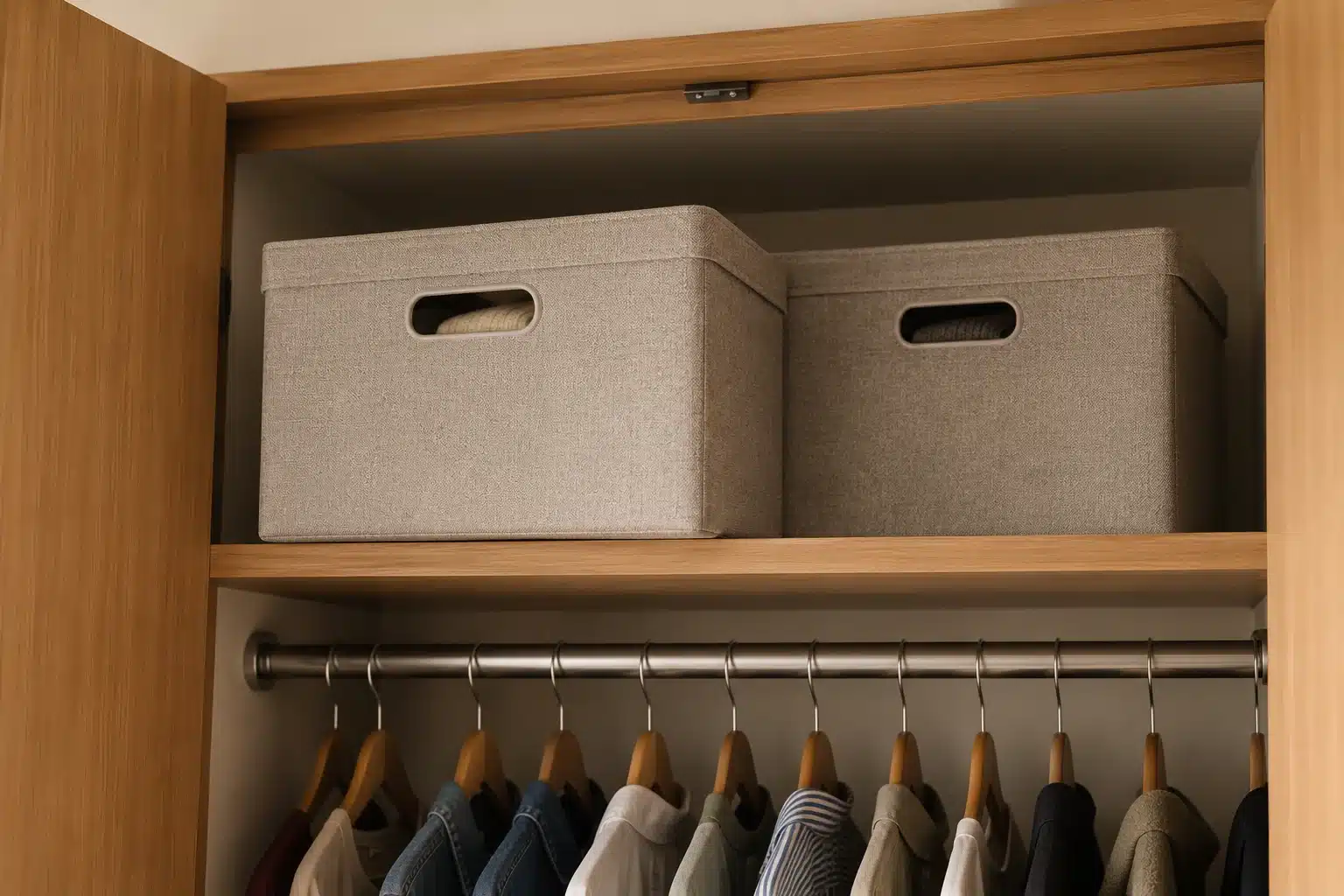
| Upper closet shelf | Suitable lightweight decorations or accessories | Releases lower daily storage | Shelf load and safe removal |
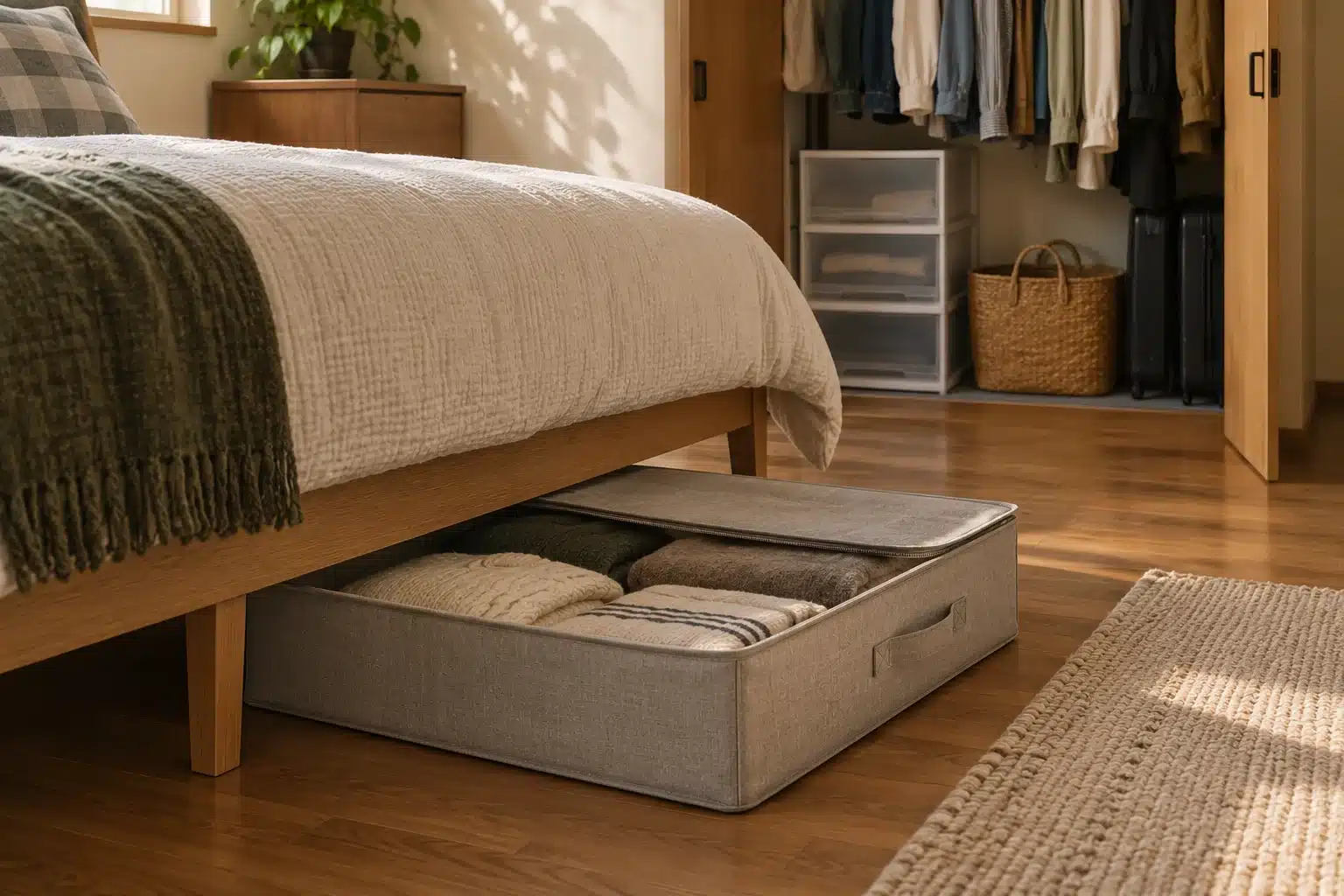
| Under the bed | Protected textiles in compatible containers | Uses an existing furniture footprint | Moisture conditions, supports and extraction space |
| Existing cabinet | Small occasional objects | Protected, bounded storage | Whether daily contents lose access |
| Clean unused luggage | Appropriate folded clothing | Uses a container already being stored | Cleanliness and your next travel date |
| Approved external storage | Selected belongings with compatible needs | Can release scarce apartment space | Conditions, cost, security and retrieval |
Choose locations for seasonal storage in a small apartment according to weight, protection and frequency. A small box of decorations used annually can tolerate more retrieval effort than bedding needed during fluctuating temperatures. Check the environment as well as capacity. An exposed balcony or a damp building storage cage is not equivalent to a dry internal cupboard.
Prepare textiles before packing them away
Follow care labels for cleaning and make sure garments and bedding are dry before storage. Check pockets and inspect seams and folds for damage or signs of pests. Keep the packed contents visible in your inventory so you can check them again rather than treating a closed lid as permanent protection.
Ordinary household clothing and fragile heirlooms need different treatment. The Canadian Conservation Institute’s textile guidance describes risks from light, unsuitable humidity, pests and poor handling, and recommends supportive storage methods for delicate objects. Avoid tightly compressing a fragile, beaded or valuable textile merely to make it fit. Seek appropriate conservation advice when the object’s condition requires it.
For everyday washable pieces, seasonal storage in a small apartment needs a container compatible with the item and location. Fold so you can identify the contents without disrupting the whole pack. Heavier pieces belong below lighter ones where appropriate. Keep shoes or outdoor gear separate from clean bedding unless they are clean, dry and adequately separated in suitable storage.
Vacuum bags can reduce the bulk of compatible items, but check textile, filling and bag instructions. They do not make damp contents suitable to store, and they do not justify a poor location. Allow for the full uncompressed volume during changeover, or the seasonal swap may leave you with nowhere to put the outgoing set.
Pack decorations and equipment by their handling needs
Wrap fragile decorations individually using materials appropriate to them and keep heavier objects from pressing on delicate pieces. Retain a purpose-made box when it protects the item and fits your space. A divided container may suit small ornaments; it is less useful for a long wreath or an awkward large object.
Store cords without sharp bends or tangles, following the product’s instructions, and note damaged items for repair or replacement before next use. Equipment with batteries or other special storage requirements needs its own manufacturer guidance. Do not pack fuel, household chemicals or similar products into a mixed textile box because there is a spare corner.
For seasonal storage in a small apartment, group items by occasion when that simplifies retrieval, but do not force incompatible shapes into one oversized container. Two manageable boxes may be easier to move than one heavy deep box. Label the contents specifically, such as paper decorations and fabric bunting, rather than using a broad label that hides breakable items or care requirements.
Check moisture, shelf loads and access
Look for condensation, damp smells, visible moisture and known leaks before choosing a storage position. The EPA’s moisture guide recommends keeping indoor relative humidity below 60 percent if possible, ideally between 30 and 50 percent, and reporting leaks or moisture problems to the building owner. These are indoor moisture-control recommendations, not a guarantee that a particular bin will protect its contents.
A sealed container can keep dust out but can also trap moisture introduced with the items. Fix or report the source of dampness rather than hiding it behind stacked boxes. Recheck a location after heavy rain, a plumbing problem or a period of condensation if those conditions affect the apartment. Follow the EPA guidance for existing mold rather than treating it as a packing problem.
Keep within stated shelf loads and furniture instructions. Put manageable light items high and heavier containers where you can handle them appropriately. Use a suitable stable step aid when needed. Avoid storing seasonal boxes where they obstruct exits, required ventilation, shutoffs or equipment servicing. An unused gap can still be an important access area.
Seasonal storage in a small apartment: a two-container changeover
Write a short inventory with the container name, contents and location. A label such as cool-weather tops, under bed left is useful if it matches a simple list you can find. Include the date packed and any care note that matters. Photographing the contents for your own reference can help when opaque boxes conceal several categories.
At changeover, bring out one incoming container and prepare one outgoing container. Put the returning items in their daily homes, clean and dry the outgoing items appropriately, and reuse the released storage location where the sizes match. Keeping the exchange bounded prevents several open boxes from occupying the room at once.
For example, two residents might allocate one measured clothing container each and a shared bedding box. Decorations occupy a separate light shelf box. If the next purchase does not fit those allocations, review the collection or find a suitable new location before buying another container. The limit comes from actual space and handling, not a universal number of bins.
Choose a review date tied to use: before the next weather change, holiday or trip. If a suitcase holds clothing, include the travel date so its contents can move beforehand. Adjust the inventory as items leave or return; an outdated list creates the same searching problem as an unlabeled box.
Before buying containers for seasonal storage in a small apartment, write one line per group: contents, next use, measured box size, storage location and how the box comes out. Draw a question mark beside any unknown measurement. Resolve that gap before ordering; otherwise a container can fit the objects while failing to fit the shelf or removal route.
Try one complete swap with containers you already own. Bring out the incoming clothes, find space to sort them and identify the outgoing set. Check where empty bags and lids wait during the exchange. If the bed or sofa becomes a permanent sorting surface, reduce the size of each changeover rather than packing more categories together.
A worked seasonal storage allocation for two residents
Imagine two residents sharing a wardrobe, a bed with usable space beneath it and one dry cupboard shelf. Their seasonal storage list includes cooler-weather clothing, warmer-weather clothing, an extra blanket and a small decoration collection. First separate the next outgoing clothing set from items used throughout the year. Put that set in existing bags temporarily and measure its relaxed packed volume. Do the same with the blanket. The aim is to learn which groups actually compete for the available space before choosing storage containers.
Suppose the usable under-bed area measures 120 cm wide by 75 cm deep at its narrowest point. Two proposed storage containers are each 55 cm wide and 70 cm deep. Side by side, their width is 110 cm, leaving 10 cm in this hypothetical space. That subtraction says nothing about height or access. Check the lids, handles and lowest support separately. Then test whether each container comes out while the bedside furniture remains where it normally stands. Use the actual dimensions of your own bed and boxes instead of borrowing these example figures.
Allocate one clothing container to each resident only if both packed groups fit without forcing closures. If one person needs more seasonal clothing space, revise the allocation together. Two equal boxes are an organizational choice, not a rule that each wardrobe must be equal. A small lightweight decoration box might use the cupboard shelf while the blanket uses another measured location. Check those locations independently: a box suitable under the bed may be cumbersome above shoulder level. The seasonal storage plan needs to reflect both contents and handling.
Now rehearse the reverse swap. The outgoing set may occupy more space than the incoming set: a collection of thick layers can exceed the volume released by lighter clothes. Open the storage containers and find a temporary clean sorting position. Note which daily items must move and how soon they return. If the swap leaves a blanket without a destination, solve that mismatch on the plan. Buying another box without locating it merely transfers the problem from clothing volume to floor space.
Troubleshoot containers that technically fit but are awkward to use
When storage containers fit the gap but catch during removal, identify the exact obstruction. A lid corner may meet a crossbar, a wheel may hit a rug edge or a handle may meet a cabinet leg. Empty the container before testing a different angle so the trial does not turn into a difficult lift. Measure the full removal route again. A smaller container or a different orientation can be more practical than moving several daily-use pieces whenever seasonal storage is needed.
If labels become unreliable, reduce the number of categories in each container before adding a more elaborate inventory. A box labeled winter supplies might mix hats, spare bedding, decorations and equipment with unrelated use dates. Separate the items you retrieve together. Put a plain contents note inside the lid and a shorter label outside where it can be read in the stored position. Seasonal clothing labels should name the owner or garment group when that helps. An accurate modest list is more useful than a detailed document no one updates.
If seasonal storage repeatedly overflows after purchases, compare the newcomer with the existing collection. Decide what role it adds and where its complete stored dimensions fit. A replacement coat does not free space until the old coat has a deliberate destination. Avoid making storage containers progressively larger when the shelf and retrieval route stay the same. Set the collection limit using the available suitable locations, then review duplicates or change the allocation consciously rather than letting an extra bag become permanent floor storage.
For a rented apartment, ask about any proposed shelf or furniture modification before treating it as available capacity. Freestanding storage still needs to follow its installation instructions. If fixing furniture is not possible in the intended place, reassign lightweight contents to an existing suitable shelf and keep heavier containers lower. Record where seasonal clothing will move if the suitcase holding it is needed for travel. This avoids a last-minute pile when the suitcase and its stored contents suddenly need separate homes.
Finish the plan with a short seasonal storage review tied to the next actual use. At that review, open one container, confirm the contents match its label and inspect the location for changes. A new bedside table, a thicker rug or a plumbing problem can alter an arrangement that previously worked. Update the location note as soon as a box moves. Keep the review bounded to the relevant group so maintaining the system does not require emptying every storage area in the apartment at once.
Write a retrieval note another person can follow
Give each seasonal storage container a short instruction if its removal is not obvious. For example, note which nearby object moves first and where the box rests while opened. Ask another resident to locate one listed item using the label and inventory, without telling them the answer. If the search fails, simplify the label or location name. Avoid numbering several identical containers without an accessible contents list; the numbers help only when someone knows what they identify.
Keep seasonal clothing decisions separate from the retrieval test. Finding a garment easily does not mean it still fits or suits the next season. When the incoming collection returns to daily storage, review its condition and practical use before packing the outgoing set. Update the inventory for anything that leaves. That makes the next changeover a fresh exchange of intentional belongings rather than repeating an outdated allocation.
Label storage containers from the accessible side and include a short contents note inside. Seasonal clothing for two residents needs an owner or clearly named group when that avoids confusion. Keep the seasonal storage list beside your other household notes so updating a moved box is one familiar action.
Questions about seasonal apartment storage
Can I store everything under the bed?
Only if the conditions, containers and access suit each item. Check supports, moisture and the space to pull boxes out. Fragile or specially cared-for objects may need another location, and regularly used belongings should remain easier to retrieve.
Are clear plastic bins always the best choice?
No. They make contents visible, but size, closure, material compatibility and the storage environment still matter. Opaque boxes with accurate labels can work too. Avoid treating any container as a substitute for dry contents and a suitable location.
Should I use scented sachets to keep clothes fresh?
Clean, dry storage and inspection come first. Added fragrance does not fix dampness or pests and may be inappropriate for sensitive textiles. Follow care requirements and investigate unusual smells rather than covering them.
When should I consider storage outside the apartment?
When an intentional collection cannot fit suitable internal zones without disrupting daily life. Assess the external location’s conditions, cost and access before moving belongings. Reducing duplicates or borrowing occasional equipment may be more practical than paying indefinitely for overflow.