The most useful nightstand alternatives for a small bedroom give you a reachable place for glasses, a phone or a book while leaving a workable route beside the bed. Start with those few objects and the available space. A narrow bedside table, compatible bedside shelf or soft pocket may each solve a different part of the problem.
This is a bedside-function guide, not a full bedroom furniture plan. If clothing storage is taking the best bedside position, use our guide to a bedroom without a closet to rearrange that zone. For an existing wardrobe, see small closet layout ideas.

In this guide
1. Measure nightstand alternatives for a small bedroom and your reach
Measure mattress-top height with the bed made as you normally use it. This helps compare table heights, but your comfortable reach matters more than matching a furniture photograph. Sit or lie in your ordinary position and place an empty box beside the bed. Try reaching for glasses without stretching across a lamp or twisting awkwardly. Adjust the surface location before choosing a shape.
Measure the gap from the bed frame to the nearest obstacle along the whole route. The widest part of a table may be its feet, and a drawer pull may project beyond the top. Include the bed’s own rail and bedding overhang. Mark a proposed footprint with paper or removable tape suitable for your flooring, then enter the room and make the bed around it.
Check doors and drawers with the proposed bedside table or bedside shelf in position. A slim table can still interfere with a wardrobe door, the bedroom door or an under-bed container. The usable arrangement needs to work at night and during everyday tasks. There is no single bedside gap that suits every person or layout; judge the actual movement and any requirements applicable to your home.
Record separate results for reach and walking access. Nightstand alternatives for a small bedroom can pass one check and fail the other: an easily reached top may project into the route, while a very shallow ledge may leave the glass beyond reach. Trial both from your usual sleeping position and while moving past the bed.
2. Compare nightstand alternatives for a small bedroom
| Alternative | Best match | Important limit |
|---|---|---|
| Narrow freestanding table | Small surface plus a drawer | Feet, drawer travel and stability |
| Simple stool used as a table | A few lightweight objects | No enclosed storage; suitable level top |
| Wall-mounted shelf | Keeping the floor easier to clean | Wall fixings, load and projecting edge |
| Compatible bed-frame shelf | A surface beside a suitable rail | Clamp or slide-in compatibility |
| Fabric bedside pocket | Glasses, a paperback or small accessories | Attachment security; no level drinks surface |
| Existing nearby dresser | Rooms with a reachable existing surface | Distance and competition with daily storage |
A wall-mounted bedside shelf frees the floor beneath it but still projects into the room. Treat the outer edge as part of the occupied route. An attached bedside shelf moves the attachment from wall to bed; it does not mean every upholstered or metal frame is compatible. The BedShelfie instruction library distinguishes clamp and slide models, illustrating why you need the instructions for the exact version.
Repurposing a stool is reasonable when it is stable, level and suitable for the intended objects. A sloped seat or open wicker top is a poor place for a glass. Test furniture you already own before buying, but do not build a bedside tower from stacked boxes or unsecured furniture.
Compare only options that solve your actual nightly tasks. When reviewing nightstand alternatives for a small bedroom, a pocket can hold a paperback but cannot replace a stable drinks surface. A drawer table adds enclosed storage but also needs opening room. Write the missing function beside each option before choosing its shape.
3. Give each nightly object a specific home
Set out everything you actually reach for after getting into bed. Common examples are glasses, a phone, water and one current book. Separate these from items that simply accumulate nearby, such as unopened mail or several finished novels. The useful surface area is the footprint of the nightly set with room to pick objects up independently.
Try a paper mock-up measuring 12 × 16 inches, then a smaller one. These are trial shapes, not recommended product dimensions. Put the real objects on each and notice whether the book covers the phone or the glass crowds the lamp base. If the surface fails, change the object arrangement or lighting choice before assuming you need wider furniture.
A shallow bedside table drawer can keep spare cables and small accessories contained. Check its internal dimensions: a narrow external table may have little usable width after the sides and runners are included. Store medicines according to their labels and household needs, including child access, rather than automatically assigning them to an open bedside tray.
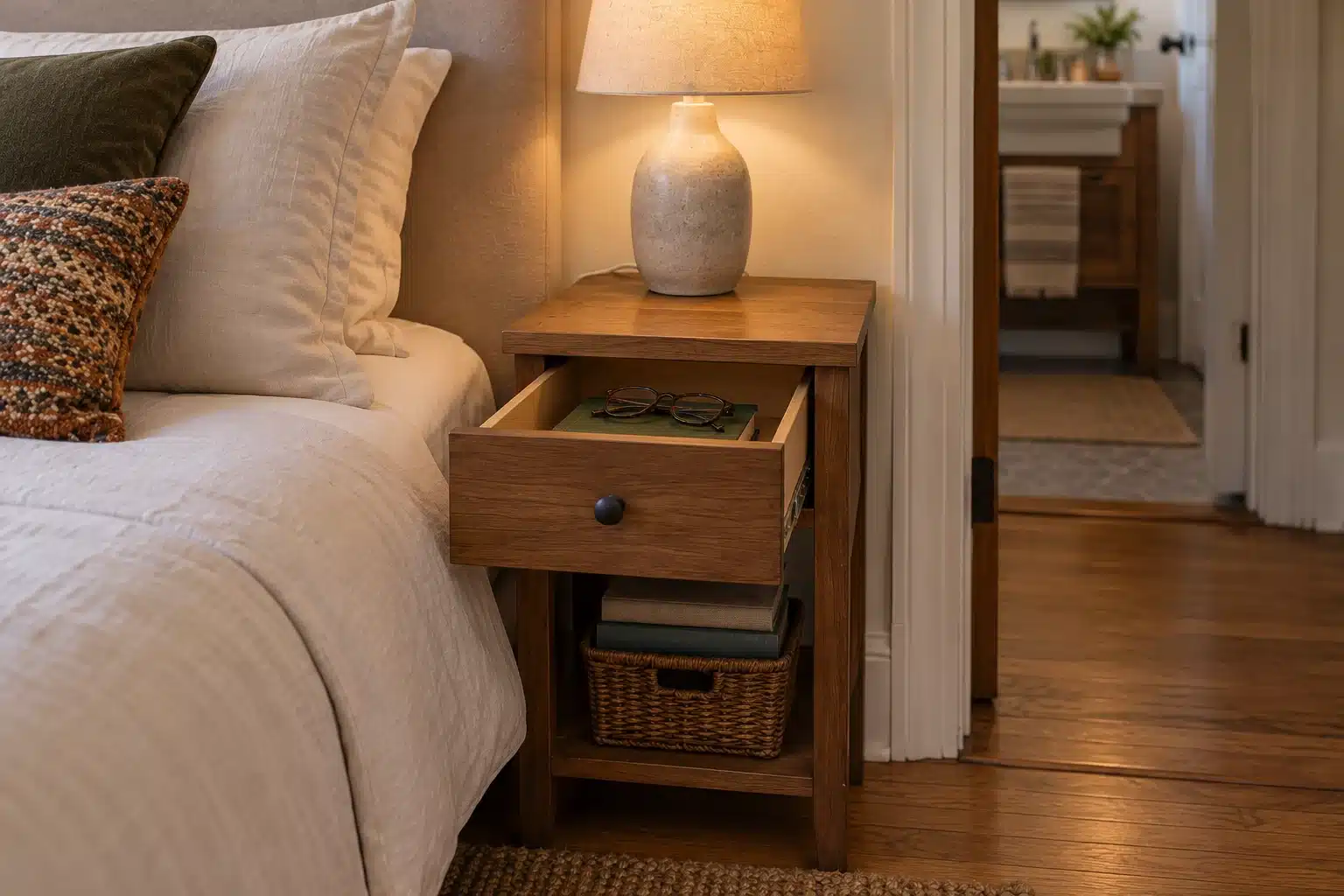
Separate the nightly set from spare supplies. Nightstand alternatives for a small bedroom need not hold every cable, finished book and daytime accessory. Trial the few items you reach for in bed on an existing stable surface, leaving enough room to pick up each one without moving the others.
4. Plan lighting and charging together
A table lamp uses both surface area and a cable route. Measure its base and place the actual shade in the mock-up if possible. A lamp that fits on the tabletop may still overhang the mattress. Check the light’s intended mounting and use instructions if choosing a clip-on or wall-mounted alternative. Do not assume a clip designed for a desk grips a thick upholstered headboard.
Locate the outlet before buying furniture with built-in charging. The cord must reach without pulling the table or crossing the walking route. Keep charger use consistent with its manufacturer guidance and provide access to the connection. Do not trap a cord in a drawer, under a furniture leg or between a moving bed part and its frame.
If a drawer holds a cable while charging, confirm that the furniture is designed for that use and that the cable can move through the intended opening. A closed drawer is not automatically an appropriate charging compartment. Where the table has no cable opening, use the surface and route the cord along an appropriate fixed edge without modifying the electrical equipment.
Make one simple sketch showing the light, outlet and cable route. Nightstand alternatives for a small bedroom should be assessed with these objects in place, because a lamp base or hanging cord can change the usable arrangement. Follow the equipment instructions and change furniture position if a cord would be pinched or cross the route.
5. Choose an arrangement for your room shape
In a bed-against-the-wall room, the open side may need to carry every bedside function. Give it to the person who uses that route and consider a simple pocket for light items on the wall side if the bed and pocket permit it. Avoid a shelf over the pillow just to preserve symmetry. Its position should suit reaching and ordinary movement.
For a two-person bedroom, the sides can differ. One person may need a narrow drawer table, while the other needs only a level ledge. Matching furniture is optional. Measure each side separately because doors, outlets and closet access rarely create identical conditions. Ensure that the shared route remains practical when both sides are occupied.
If the bed faces a dresser nearby, check reach carefully before treating the dresser as a nightstand. Standing up for a glass may be acceptable for one person and defeat the purpose for another. A small tray containing nightly objects can simplify the dresser surface, but that tray needs a stable home and should not migrate to the bed when the surface gets crowded.
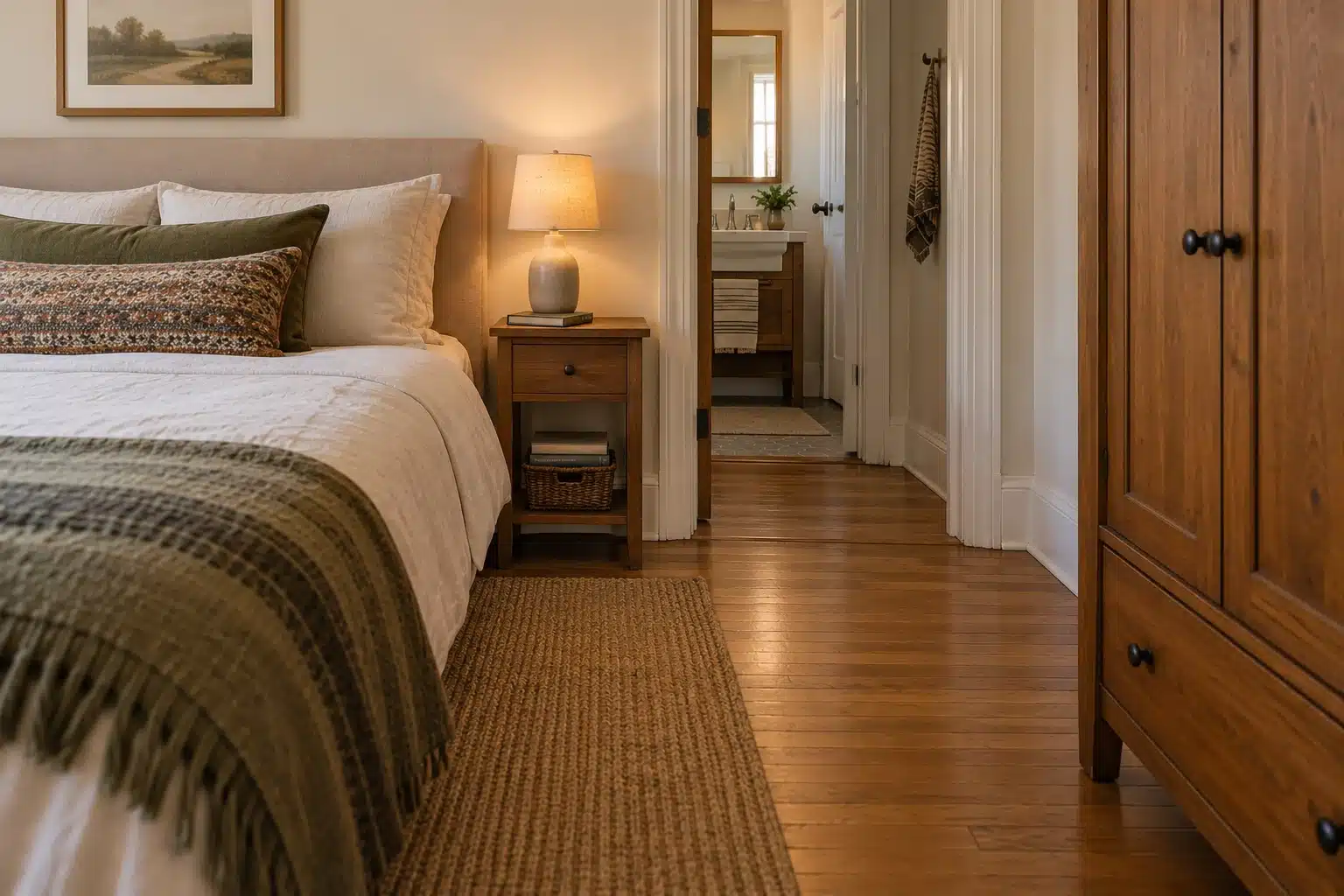
Plan each side separately before considering matching furniture. Nightstand alternatives for a small bedroom may need to differ where one side meets a wall and the other meets a wardrobe door. Keep a workable position for each person and assess any shelf edge along the path used for getting into bed.
6. Use a full-size trial before buying
Suppose the measured bed-to-wall gap is 29 inches and a proposed table projects 11 inches into it. The remaining 18 inches is a simple subtraction, not a clearance recommendation. The result tells you what to mock up and assess. Try the route wearing ordinary slippers, carry a laundry basket past it and pull the bedding into place. Include anyone else who uses that side.
A wall shelf 8 inches deep would leave more floor width in this example, but its height may put the edge where a hand or body passes. A bed shelf might shift the projection elsewhere yet interfere with getting up. Compare the options in the room, not solely by their listed widths. Remove the mock-up if it obstructs ordinary movement.
Try the proposed surface for several evenings using stable furniture already available. Record a specific problem: the glass is beyond reach, the light occupies half the top, the drawer hits the bed rail, or the cord falls down. Each problem suggests a targeted adjustment. It is easier to solve those before delivery than after installing a wall shelf.
Use your trial to identify one concrete correction. Nightstand alternatives for a small bedroom are easier to compare when the problem is written as “drawer catches the bed rail” or “lamp leaves no place for water.” Adjust that feature and repeat the ordinary task instead of buying a larger surface without knowing what failed.
7. Check installation and acknowledge the limits
- Measure external footprint, top area, height and drawer travel separately.
- Read mounting instructions and load guidance for the exact shelf or pocket.
- Confirm the bed rail’s shape and dimensions for an attached shelf.
- Check wall type and appropriate fixings for a wall-mounted option.
- Include lamp, shade, charging cable and handles in the setup.
- Keep a return option if the fit cannot be established beforehand.
Ask about rental installation permission where applicable. “Removable” does not establish damage-free installation on every finish. Follow the chosen hardware’s substrate and preparation requirements. A shelf that needs structural fixing should not be substituted with adhesive strips simply because drilling is inconvenient.
Compact furniture has tradeoffs. A soft pocket offers little dust protection and cannot support a drink. A stool provides no drawer. A wall shelf is less flexible after installation, while a rolling cart needs secure parking and may occupy more space than expected. Choose the limitation you can comfortably live with rather than expecting one object to perform every bedside job.
Keep the exact model instructions beside your room measurements. Nightstand alternatives for a small bedroom that attach to a bed or wall depend on compatible structure and suitable fixings. If that cannot be confirmed, choose an appropriate independent piece rather than improvising an attachment to make a preferred image possible.
A bedside worksheet and a two-person room example
| Record for your own room | Your notes |
|---|---|
| Objects reached for after getting into bed | ________________________ |
| Mattress-top height in ordinary use | ________________________ |
| Comfortable reach from the usual sleeping position | ________________________ |
| Maximum surface and foot projection into the route | ________________________ |
| Drawer, wardrobe and under-bed access in use | ________________________ |
| Lamp base and shade footprint | ________________________ |
| Outlet position and intended cable route | ________________________ |
| Bed or wall compatibility for attached options | ________________________ |
| Installation permission and product instructions | ________________________ |
Fill in the worksheet for each side of the bed separately. Keep the notes about reach alongside the notes about room movement: neither replaces the other. Record which objects genuinely need a level surface and which can use an appropriate pocket. A bedside table is one way to supply that function, while a bedside shelf is another; begin with the function rather than making both sides look identical.
Consider a hypothetical two-person bedroom with a wardrobe door beside one side and an uninterrupted wall beside the other. One person reaches for glasses and a paperback; the other uses water, a phone and a light. Their nightly sets need different surfaces. Before buying furniture, each person trials a stable existing piece with the real objects in their ordinary positions, then makes the bed and walks the route around it.
The first side appears to suit a narrow bedside table until its drawer is opened. The drawer catches the bed rail, leaving an awkward partial opening. A table without a drawer could solve that particular conflict if it still holds the nightly set. Alternatively, a compatible bedside shelf might work, but its projecting edge and attachment instructions need checking. The failed drawer does not by itself establish which alternative is best.
On the wall side, a fabric pocket can hold the paperback and glasses if the product and bed permit that attachment. It does not give water a stable horizontal home. The person who needs a drink should trial a separate appropriate surface or reconsider the object arrangement. A bedside shelf mounted above the pillow should not be introduced merely to make the furniture symmetrical; its position must suit reach and normal movement.
Now add the lighting arrangement to both trials. The existing lamp may consume most of the smaller top, or its shade may project farther than its base. Measure those parts separately. A different suitable lighting product may release surface area, but it brings its own instructions and mounting conditions. Include its cord in the route trial rather than treating lighting as decoration added after the bedside table has been chosen.
For charging, start from the outlet and trace the intended cable path to the device. Keep the connection accessible and follow the equipment guidance. If the proposed bedside table traps the cable behind a moving drawer or pushes it beneath a leg, move the furniture or use another appropriate route. Do not make improvised holes in electrical equipment or assume an enclosed drawer is designed for active charging.
For a renter, compare a suitable independent bedside table with an attached bedside shelf before paying for hardware. Keep the wall or bed compatibility, any required permission and the actual product instructions in the comparison. Buying a freestanding piece does not remove stability checks, and buying an attached shelf does not prove the underlying structure is suitable. Choose the option whose complete installation and ordinary use can be established.
After several normal evenings, ask what still fails. If a glass is hard to reach, adjust position; if objects fall behind the surface, improve their assigned locations; if the drawer blocks bedding work, change that function or shape. These are specific observations you can act on. Keep the final nightly set small enough that each object can be removed independently and the room remains straightforward to use in the morning.
Questions about nightstand alternatives for a small bedroom
Does the surface need to match mattress height?
Use that height as a starting reference and test your reach. A useful position depends on the person, mattress and object. Avoid buying by appearance alone, especially when a low or high surface would require uncomfortable bending from bed.
Can I use one nightstand for two people?
Only if both can reach the items they need and the arrangement suits their routines. A shared surface beyond one person’s comfortable reach is not equivalent to two bedside positions. Different small solutions on each side often work better.
Is a shelf better than a table?
A shelf can release floor space, while a table is easier to reposition. Compare projection, reach, mounting and storage needs. The better choice is the one that passes those checks in your room.
What can I use without buying anything?
Trial a stable existing stool, small side table or reachable dresser. Limit the nightly set and check the light and cable arrangement. A temporary trial should still provide a reliable level surface rather than a pile of objects that can shift.