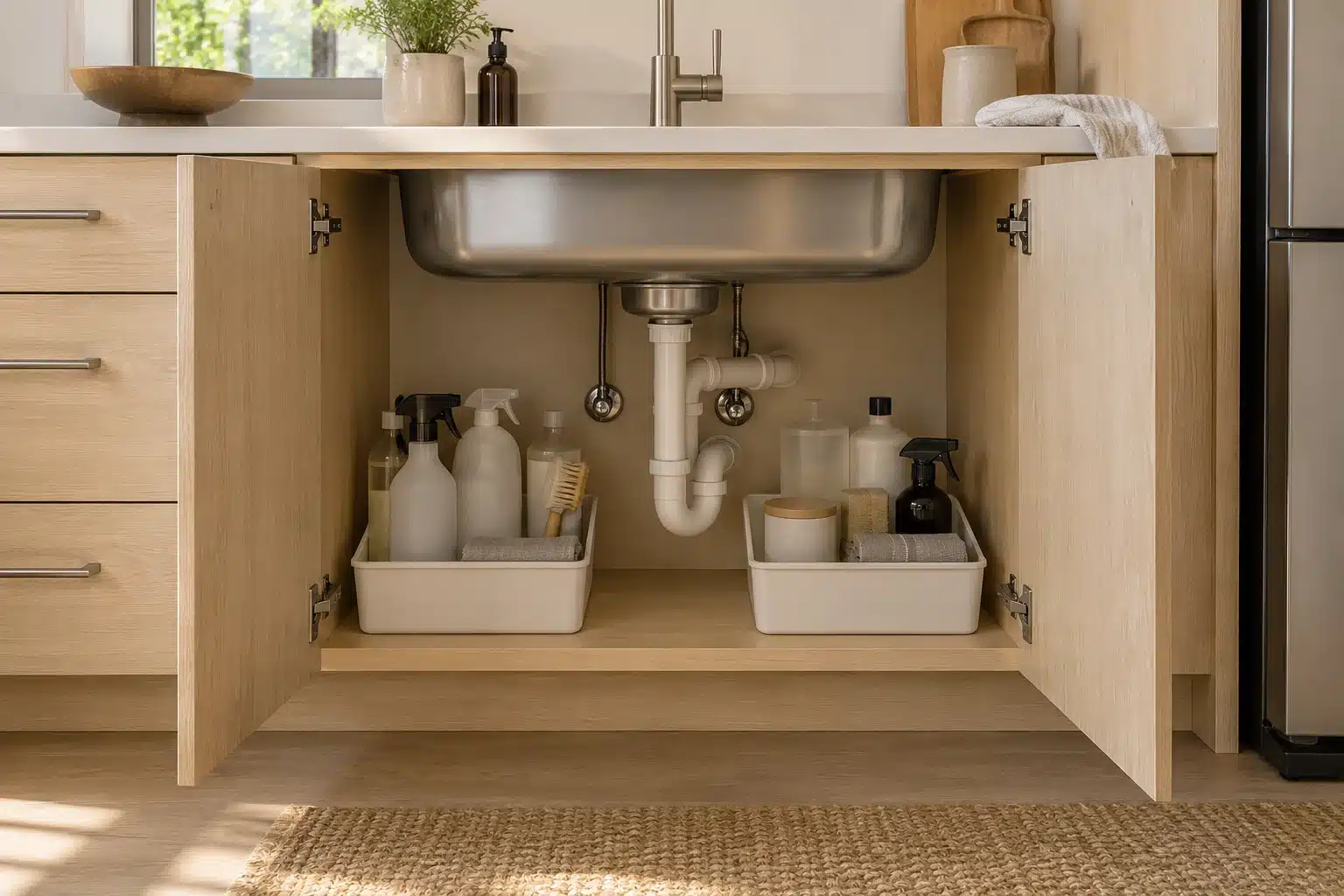
Under-sink kitchen organization should make cleanup supplies easy to retrieve while leaving plumbing visible and reachable. Empty the cabinet, check its condition, map the space around pipes and choose a few removable containers. This is a working service area, so filling every gap is rarely the best arrangement.
For food storage, use our guide to a small kitchen without a pantry. For the workspace above the cabinet, see small-kitchen counter-space planning. Keeping these tasks separate stops the sink base becoming overflow for everything.
In this guide
1. Begin under-sink kitchen organization with an inspection
Begin under-sink kitchen organization by removing the contents and checking the base, pipe joints and back panel for dampness, discoloration or damaged material. Look again after normal sink use. A storage reset should not conceal an unresolved leak. If you rent, report evidence of a problem to the person responsible for repairs; if you own the home, arrange appropriate assessment rather than assuming a new liner will protect a failing cabinet.
EPA WaterSense’s maintenance guidance recommends looking under sinks for leaks at pipe connections, puddling and water spots. The practical implication for storage is visibility: make it possible to inspect the base without dismantling an elaborate shelf system. A neat row of bins should not hide the place where moisture first appears.
Clean the sound cabinet using a method suitable for its finish and let it dry before restocking. Do not disturb pipes, electrical connections, a disposal or filters to create more room. Locate the shutoff valves and establish how to reach them, but avoid forcing a stiff or damaged valve as part of the organizing exercise.
2. Map usable pockets around pipes and equipment
Measure sink cabinet storage at the clear opening and across the cabinet’s interior width and depth. Draw a simple overhead sketch of the drain trap, supply lines, valves and any disposal or filter. Add hoses, cords, hinges and the sweep of the closing doors. The cabinet may contain a wide front pocket and two narrower side pockets rather than one useful rectangle.
For each pocket, record usable width, depth and height. An illustrative left pocket might be 8 inches wide, 14 inches deep and 12 inches high below a pipe. A bin measuring 7 by 12 by 10 inches could fit there, but its handle and removal route still need checking. These numbers describe a sample fit exercise, not a recommended cabinet clearance.
Include the movement of a proposed organizer. A basket can fit beneath the trap yet hit it when tilted for removal. A sliding shelf can catch a door hinge as it travels forward. Use an empty existing container or a cardboard footprint to test the route without pressing on plumbing. Preserve access to removable fittings and equipment service points.
Worked example: two unequal pockets around plumbing
Imagine a sink base with a 46 cm clear opening and a trap occupying the central rear area. The left usable pocket is 17 cm wide, while the right is 23 cm wide once hinges and the door movement are included. These are example measurements, not standard cabinet sizes. A symmetrical two-bin set might leave one bin unable to pass the opening or sit flat. Draw the actual pockets before selecting sink cabinet storage.
Add a tall spray bottle and a short refill to the sketch. The spray head projects beyond the bottle body, and the taller bottle needs extra room to be lifted from a bin. Cleaning supply storage must accommodate that removal, not just the bottle standing still. Keep original labels and closures, and compare each product with its appropriate storage conditions and household access requirements. A convenient low cabinet may be unsuitable for some products or households.
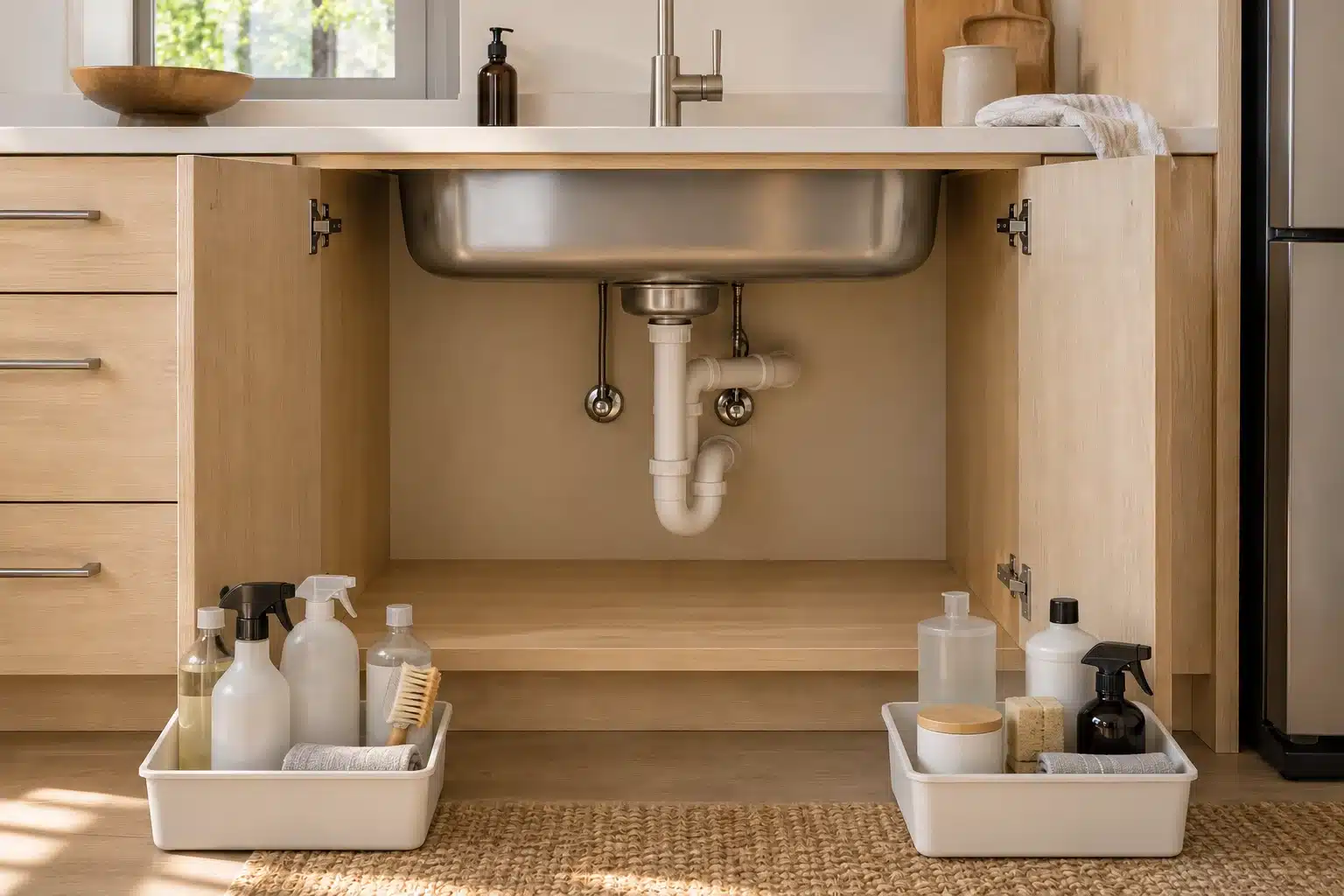
Test the front pocket with a removable caddy for the few compatible items used regularly. Leave the rear plumbing recognizable and accessible. If taking out the caddy exposes the required inspection and service area, it may be more useful than a full-width rack. Sink cabinet storage that hides a connection behind installed shelves can make the next repair more difficult even when it increases apparent shelf area.
Now simulate returning supplies after cleaning. Can the caddy sit flat without leaning against a pipe or pressing a bottle into the trap? Does the door close normally? If the refill forces an awkward stack, move it to another suitable secured location or reduce duplication. Under-sink kitchen organization should respect the irregular cabinet rather than trying to turn it into a rectangular pantry with inaccessible space at the back.
| Sketch label | What to include | Fit decision |
|---|---|---|
| Left pocket | Hinge, side panel and lift space | Use its actual width |
| Right pocket | Bottle tops and removal route | Allow full-height retrieval |
| Front daily group | Caddy handles and filled contents | Keep removable and stable |
| Service area | Valves and removable connections | Preserve recognizable access |
3. Choose under-sink kitchen organization by the pocket
| Storage method | Useful role | Reason to reject it |
|---|---|---|
| Low removable caddy | A small set of daily cleaning supplies | Too heavy to carry or too tall beneath the trap |
| Shallow open bin | Trash bags and unopened compatible supplies | Hides leaks or cannot pass through the opening |
| Two-tier organizer | Clear side pocket with spare height | Upper tier presses on pipes or blocks valves |
| Installed pull-out | A deep unobstructed cabinet section | Travel conflicts with plumbing or installation is unsuitable |
| Door holder | Light items on a compatible door | Collides with bottles or strains hinges |
On the cabinet sketch, mark three different areas: a daily-supply pocket, a suitable backup pocket, and the service access to keep available. Compare a proposed organizer with all three. Reject extra capacity that requires reaching through chemical bottles to identify a valve or inspect a connection.
Choose under-sink kitchen organization for each available pocket rather than buying a large adjustable system first. A pair of ordinary low bins may use an irregular cabinet more effectively than a full-width rack. If the only clear area is at the front, give it to daily supplies and accept that the rear remains a service zone.
4. Decide which supplies belong under the sink
Start with the cleanup tasks performed in this kitchen. Dishwashing supplies, suitable cleaning products and trash-bag refills may need nearby storage, subject to their labels and household access needs. Remove spare food, cookware and vulnerable paperwork from the cleaning-supply zone. An unused cavity is not a good reason to combine unrelated items.
Keep hazardous products in their original labeled containers, follow their storage directions, and do not mix leftovers. EPA’s household hazardous waste guidance covers these precautions and local disposal options. An attractive unmarked spray bottle removes information that matters when somebody else uses the product.
Where children or pets may gain access, plan cleaning supply storage and securing measures appropriate to the product and household. A low open cabinet is not automatically a suitable home for cleaning chemicals. If its access cannot be managed appropriately, relocate the products to a suitable secured place rather than relying on the bin arrangement.
Check unusual supplies individually. Aerosols, solvents and pest-control products may have storage requirements that this cabinet cannot meet. Do not group incompatible products merely because their bottles look similar. Keep absorbent cloths and clean replacement sponges away from leaking bottles, and return reusable cleaning tools only once suitably dry.
A no-purchase trial for cleaning supply storage
Begin only after unresolved leaks or cabinet-condition problems have been addressed. Empty and inspect the area, then separate the compatible products you use routinely from unnecessary duplicates and items that belong elsewhere. Cleaning supply storage should follow product labels and household needs first. It is not a reason to combine unlike liquids, remove information or place potentially harmful products where access cannot be managed appropriately.
Use a sound washable caddy or low container appropriate to the bottles if one is already available. Place it in the best measured pocket and confirm that the base is supported. Avoid balancing it on a pipe or using plumbing as a bracket. Low sink cabinet storage often makes contents easier to see than tall baskets. Test whether the container itself adds an awkward lift before deciding it is an improvement.
Give backups a small defined section in suitable storage, preserving labels and closures. Check it before buying another bottle. If it is already full, identify whether the household has normal refills or unnecessary duplicates; do not conceal them behind the trap. Cleaning supply storage is easier to maintain when current products and appropriate backups are recognizable without unloading the cabinet. A bigger basket does not answer why duplicates keep arriving.
Carry out an ordinary cleanup and return the supplies. Note any bottle left on the counter because putting it away is difficult. Change the receiving location or the amount stored in that pocket before buying a second tier. If an accessory is needed, measure its complete frame, handles and travel. Sink cabinet storage products that are adjustable still need a compatible opening, supported base and installation arrangement.
5. Build a daily caddy and a limited backup section
Choose a low caddy for the small set of products used during ordinary cleanup. Keep bottles upright, with labels readable and closures properly secured. Check the total carrying weight before filling a handled container. A caddy is helpful when it moves as one manageable unit; it is less helpful when a handle blocks access to the sink trap.
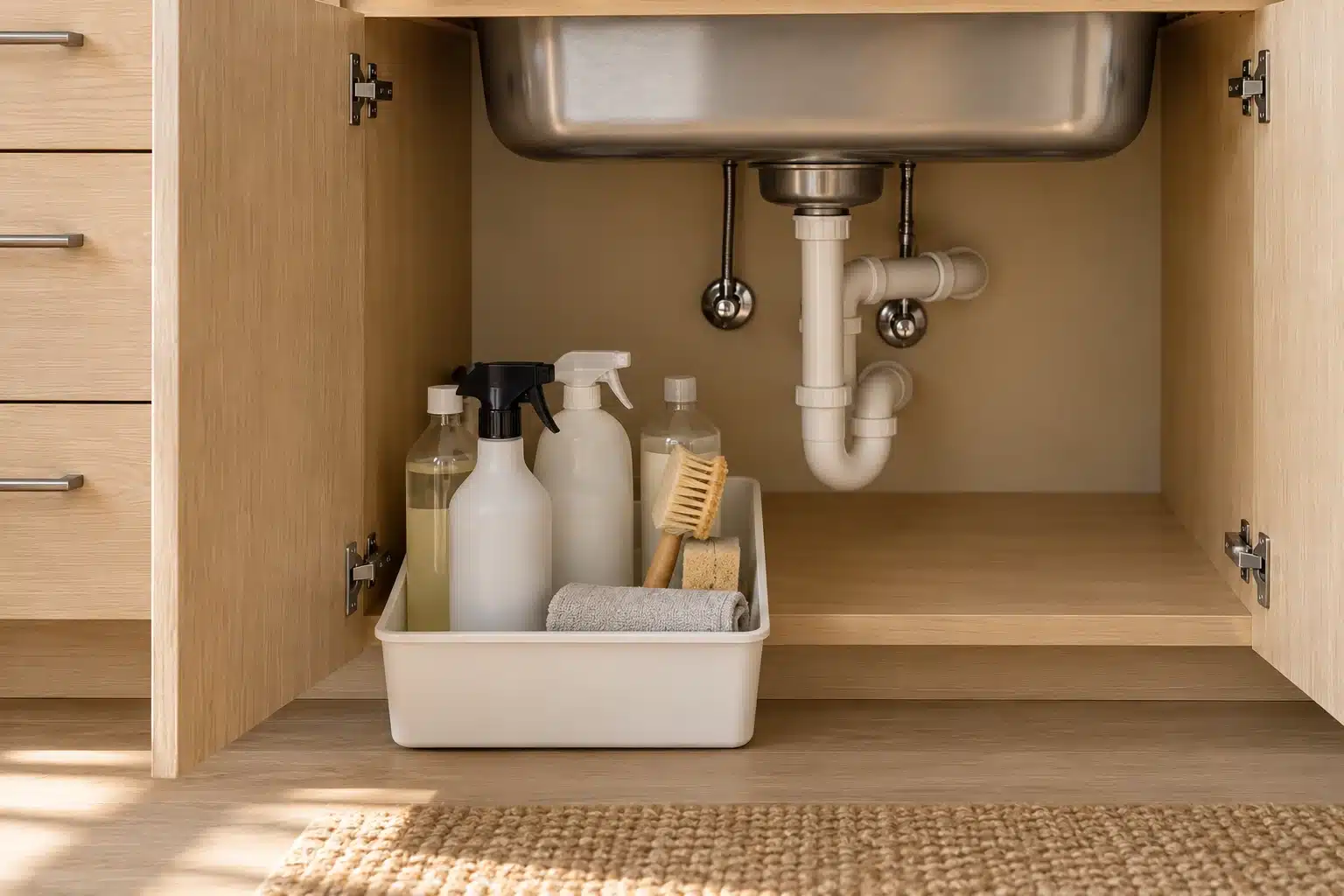
Keep a separate small backup section in your under-sink kitchen organization for suitable unopened products and refills. Before shopping, check this section rather than counting only the bottle above the sink. Limit duplicates according to the household’s normal consumption and available suitable storage. Buying a large refill saves no cabinet space if it forces the daily supplies into an awkward stack.
Give trash bags a simple, visible position. Their packaging may already work without a dispenser. If a box becomes crushed, a low bin can hold the roll while leaving the pipe area clear. Keep the routine easy enough that returning a product takes one action rather than opening several nested lids.
6. Preserve service access in under-sink kitchen organization
Stand in front of the open cabinet and identify the first item you would need to move to reach a valve. Aim for a small removable group rather than a fixed structure covering the entire back wall. Ensure plumbing connections remain visible and equipment can be serviced according to its instructions. Do not hang a storage load from water pipes or hoses.
A spring rod may appear to provide instant hanging space, but bottle weight, cabinet surfaces and the rod’s rating affect whether it will remain supported. It must not bear against fragile plumbing or obstruct access if it slips. A removable floor caddy is often the simpler option when you cannot establish a suitable rod installation.
Door storage requires a closed-door test with the cabinet fully stocked. Include the spray trigger, bin rim and projecting door holder. The holder may need more depth than the light items it contains. Avoid stacking items against a valve simply to make room for a new holder; improving one storage surface should not compromise the service area.
7. Keep the base easy to inspect and reset
A removable shallow tray can contain a small product spill, but it does not repair a leak or guarantee protection against water damage. Select a tray that can be lifted out and cleaned without catching pipes. Avoid thick absorbent liners that remain damp or permanently obscure the cabinet base. Check both the tray and the surface beneath it during ordinary housekeeping.
Maintain under-sink kitchen organization by occasionally removing the containers, inspecting the base and checking bottle condition. If moisture appears, address its source rather than adding another layer. If you use a leak alarm, position and maintain it according to its instructions. Keep it accessible, and do not assume a sensor compensates for packed shelves that conceal plumbing.
Review the system after several cleanup sessions. If the same bottle keeps returning to the countertop because its cabinet home is inconvenient, move the caddy forward. If the backup section keeps growing, change the buying routine. If containers have to be rearranged to close the doors, the system needs fewer layers or different dimensions.
Troubleshoot a crowded sink base without hiding access
If a spray head catches a shelf or pipe, measure the complete bottle rather than only its body. Place daily bottles where they can be lifted out upright when their instructions and shape require it. A shelf that fits between pipes may still prevent retrieval. In cleaning supply storage, an unplanned tilted movement can also make labels hard to read or expose closures to avoidable contact. Choose another pocket when the movement remains awkward.
If the bin shifts every time a bottle comes out, check its base, support and contents. A narrower appropriately supported container may be more useful than one extending into an irregular rear area. Keep sink cabinet storage independent of plumbing. Do not wedge the bin between hoses or press a spring rod against fragile surfaces to make the arrangement stay in place. A storage accessory should not change the loading on installed fittings.
If dampness appears after the reset, remove affected storage as appropriate and address the source. Follow the existing moisture and repair guidance rather than adding another liner. Check whether a bottle is leaking as well as whether plumbing is involved; retain and handle products according to their labels. Cleaning supply storage does not conceal a moisture problem successfully just because the contents are inside waterproof-looking bins.
If access during maintenance requires dismantling a rack, compare the extra capacity with that inconvenience. Keep removable daily groups toward the front and essential service areas identifiable. Write a simple cabinet map for other household members: current supplies, suitable backups and access to preserve. Review under-sink kitchen organization by whether you can retrieve products, inspect the cabinet and return everything without pushing contents against pipes.
| Repeated issue | Inspect | Next adjustment |
|---|---|---|
| Bottle catches overhead | Spray head and lift route | Move to a taller usable pocket |
| Bin cannot pass doorway | Hinges and full handle width | Choose a compatible smaller group |
| Backups hide plumbing | Service map and stock quantity | Relocate suitable duplicates |
| Moisture returns | Bottle condition and cabinet source | Address the cause before refilling |
Record the pockets and the access to preserve
Keep the sink cabinet storage sketch with product and organizer documentation. Label each usable pocket, its maximum measured opening and the contents assigned there. Draw the service area distinctly so another person does not treat it as a new overflow space. Add any relevant installation instructions for hardware instead of recording only a shopping link.
List the compatible products in the daily caddy and the suitable backup location. Check that cleaning supply storage remains appropriate when a different bottle size arrives. A larger spray head can change retrieval or door clearance even when the liquid quantity is unchanged. Repeat the affected pocket check rather than pushing the bottle inward against a pipe.
Use the daily caddy as a receiving group only if it remains stable, manageable and suitable for its contents. During ordinary put-away, look for the bottle that repeatedly ends up beside it. That observation may reveal a full group or an inconvenient pocket. Adjust sink cabinet storage around that specific problem while preserving access and appropriate product conditions.
Questions about kitchen sink-base storage
Is a two-tier organizer always the best choice?
No. It helps only where a clear pocket has suitable height, support and retrieval space. Low pipes, a disposal or narrow door opening may make individual bins easier. Measure the upper tier’s complete loaded height before choosing one.
Can I put dry food under the sink?
Use a separate suitable food-storage zone. Cleaning products, possible leaks and service access make the sink base an awkward place for groceries. Moving one light serving item may free a better food shelf elsewhere.
Should I cover the cabinet floor with waterproof material?
A removable, suitable tray may help with small spills, but inspect beneath it and address leaks promptly. Waterproof-looking material can conceal moisture. Follow the cabinet maker’s guidance for protecting its finish.
What if a disposal takes up almost all the space?
Use the remaining unobstructed area for a small removable daily kit and relocate backups. Keep the disposal’s electrical and service access available. You do not need to maximize storage in a cabinet whose main role is supporting equipment.