
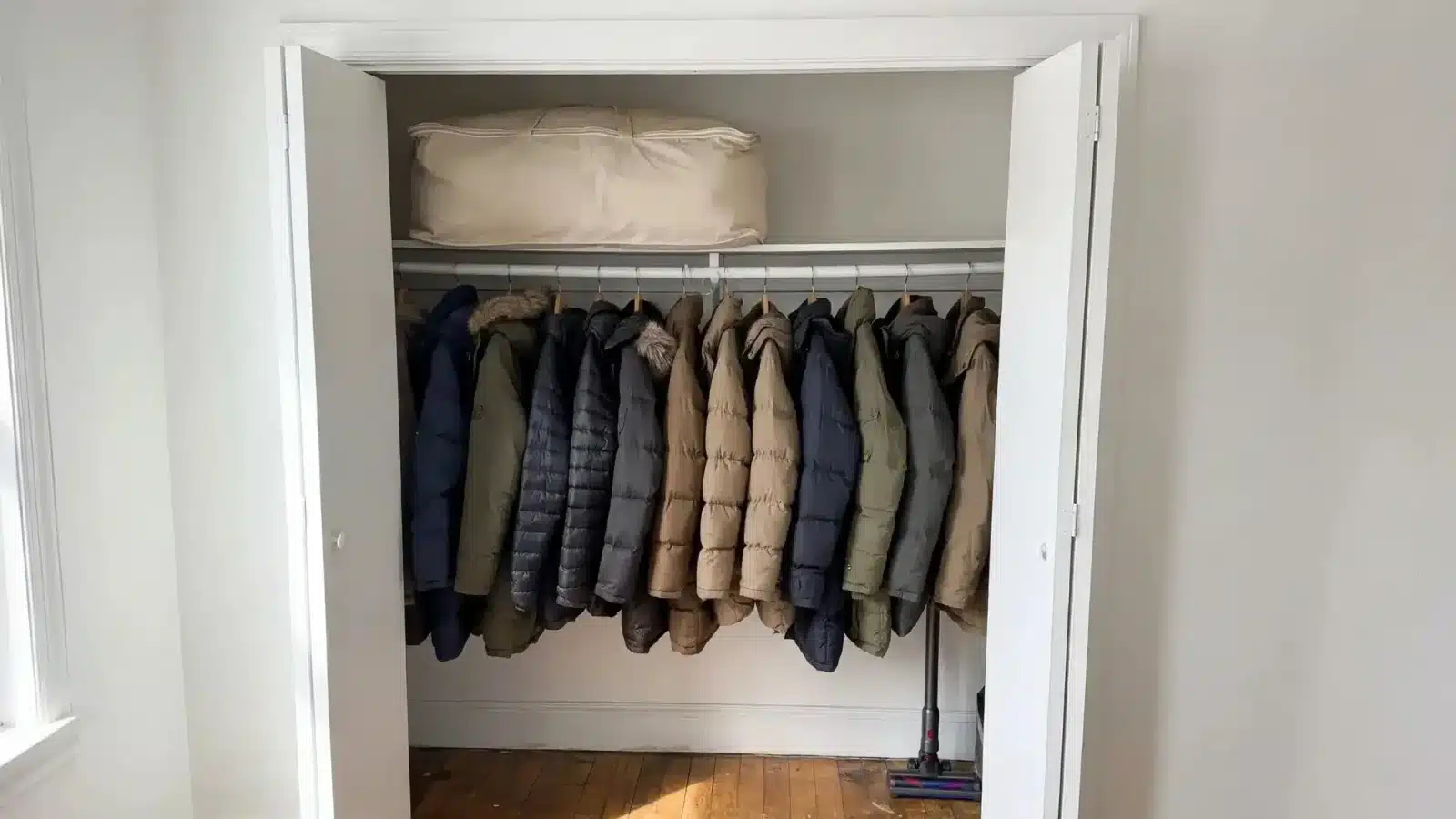
Storage for bulky items in a small apartment works when each thing gets the spot its weight and shape suit: heavy coats on the closet rod, comforters in breathable bags on a high shelf, and fans, heaters and vacuums upright on the 24 inch deep closet floor. Most renters can skip a storage unit.
The exceptions are furniture between moves and gear that really will not fit, and I get to those at the end. This is for apartments with a closet or two and no garage, basement or attic. The sizes below are typical ones, so measure your own things before you buy a container for them.
In this article
Where does storage for bulky items go in a small apartment?
Bulky things cause trouble because they go where there happens to be a gap, not where they belong. Sort them by one rule: light goes high, heavy goes low, and anything you use every week stays within arm’s reach.
| Item | Typical size | Best home | Skip |
|---|---|---|---|
| Heavy winter coat | 3 to 4 in of rod | Closet rod, at the wall end | Vacuum bags, folding under weight |
| Queen comforter | Bag about 24 x 18 x 9 in | Top shelf, under a tall bed, inside a suitcase | Plastic bags, damp closet floors |
| Large suitcase | About 28 x 18 x 11 in | Closet floor, packed with bedding | Storing it empty |
| Upright vacuum | About 15 x 14 x 44 in | Closet corner or behind a door | Anywhere you must move things to reach it |
| Box fan | About 22 x 21 x 5 in | On edge against a closet wall | Under the bed, where it collects dust |
| Oil-filled heater | About 25 x 15 x 6 in | Closet floor, once cool and unplugged | High shelves, since it is heavy |
| Bike | About 68 in long | Building bike room or a tension-pole rack | Leaning on a hallway wall |
| Skis or snowboard | 5 to 6 ft long | Upright in a closet corner | Under the bed if still damp |
If luggage is your main problem, where suitcases fit and what to pack inside them has the full plan. A large bag holding a spare comforter takes that comforter off your list entirely.
How do you store bulky winter coats?
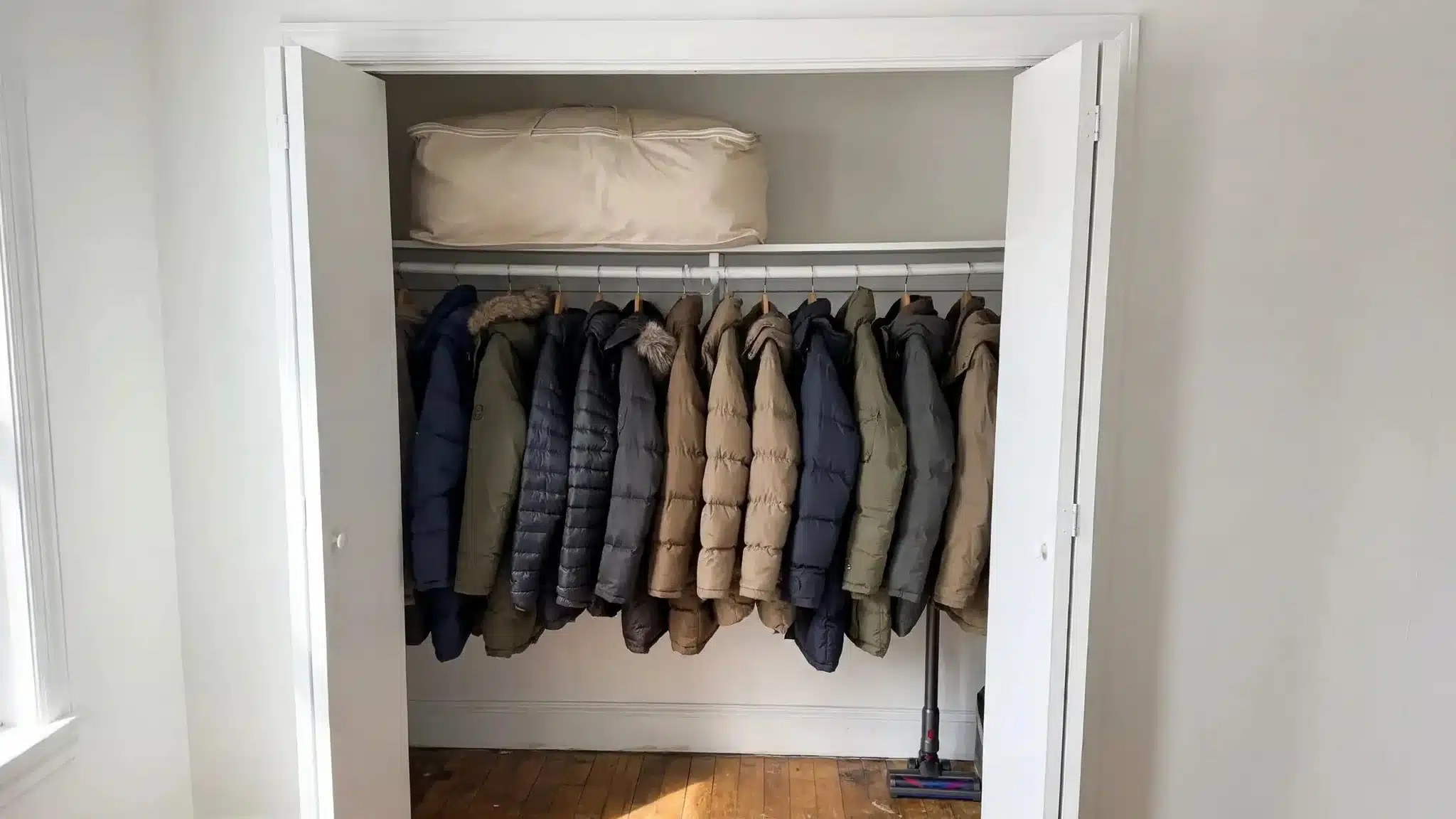
Hang them. Coats are the bulkiest clothes you own, but they hold their shape best on a rod, and a coat costs less rod than most people assume. On a 6 foot closet rod, five heavy coats at about 4 inches each take 20 of your 72 inches, which leaves 52 for everything else.
Push them to the wall end of the rod in summer, on wide hangers so the shoulders do not dent. Clean them before they go there, because clothes moths go for food, sweat and body oils, and wool that looks clean may not be. A cloth garment bag is fine for everyday coats. For good wool, university extension guides favor tightly closed containers over cedar, which gives weak protection, so use a sealed garment bag or a lidded bin and check it once a year.
Keep only what you wear this week by the door. Two coats per person on a hook rail is plenty, and the small entryway guide covers how to fit that without blocking the door. If the closet itself is the trouble, a better closet layout often finds more rod than you expect, usually by giving long coats one short section and doubling up the rest.
When there truly is no rod left, ask your dry cleaner. Some offer off-season storage for coats, which is usually a tidier answer than a storage unit for a few garments. Ask what it costs and how they store them.
How do you store bulky blankets and comforters?
A loose comforter is mostly air, so it is light but big. That makes it the right thing for spots that are hard to reach.
- The top closet shelf. Closet shelves are often 12 to 16 inches deep, so a soft 18 inch bag will hang over a little. That is fine for something this light, and much safer than a box.
- Under the bed. Many metal frames clear only about 7 inches, so a 9 inch bag squashes to fit or does not fit at all. Taller legs fix that, and the under-bed sizing guide has the numbers.
- On top of a wardrobe. Comforters are what this spot was made for, since they weigh little and do no harm if they slide.
- In a storage ottoman or bench. It keeps the blanket within reach and adds a seat. Measure the inside, since lids and frames take a few inches.
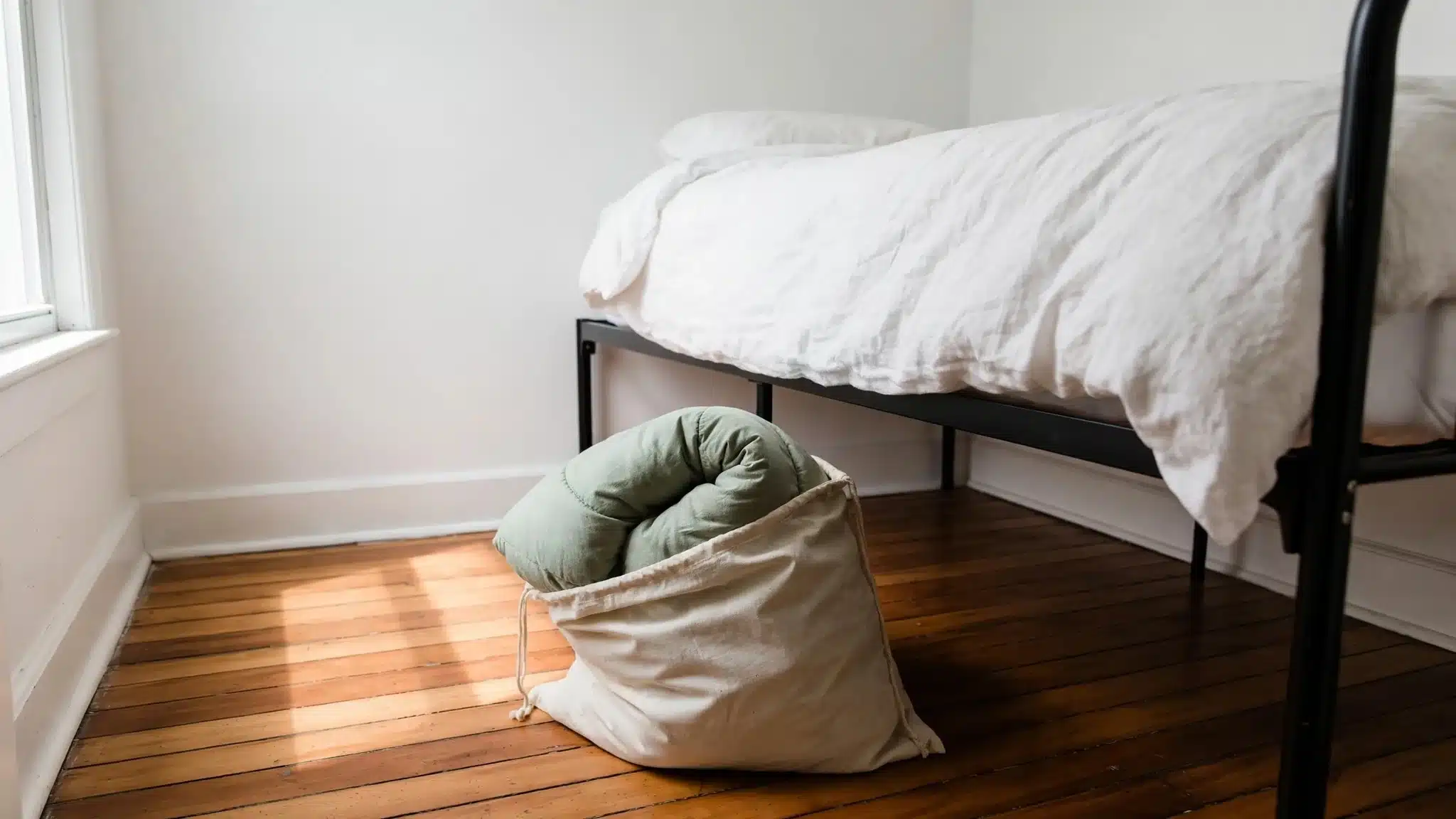
Wash and fully dry anything before it goes away, and be honest about how many you need. One spare per bed plus one for guests is plenty for most homes, and every extra comforter is a shelf you do not have for something else.
Do vacuum bags work for bulky clothes and blankets?
Yes for some fabrics, and no for the ones people most want to squash. Vacuum bags are good at reducing volume, but they do nothing about weight. A compressed comforter weighs the same as it did, and it now comes as a hard, slippery slab that can slide off a shelf. Cheaper bags can also slowly let air back in, so check them now and then.
| Material | Vacuum bag? | Why |
|---|---|---|
| Polyester comforter, fleece | Yes | Synthetic fill usually recovers well, though it can take a day to fluff up |
| Cotton quilts, towels, sheets | Yes | Expect deep creases |
| Wool sweaters | Short term | Creases set in, and the wool must be clean first |
| Down comforter or down coat | Moves and trips only | Long compression can damage the fill |
| Leather or tailored wool coat | No | Creases can become permanent, and the shape suffers |
Down is the one to be careful with. Rab, an outdoor gear maker, says of its sleeping bags that “prolonged compression can damage the down,” and it tells owners to keep them in a larger breathable storage sack and out of plastic. A comforter is the same fill in a bigger shell, so I would follow the same advice. I could not find a maker that names a safe number of weeks. Treat a move or a trip as fine and a whole summer as too long, and check the care label on yours.
Whatever you seal, make sure it is bone dry. Moisture trapped in an airtight bag has nowhere to go, and the first you hear of it is the smell when you open the bag in October.
Where do the vacuum, fans and space heaters go?
These are the awkward ones, because they are hard objects with cords, and they have to come out again. Their natural home is the closet floor, and the part people miss is how much of it sits free under hanging clothes.
Work it out with a 6 foot reach-in closet. With the rod at about 66 inches, a 40 inch coat leaves about 26 inches of height below it. That clears a box fan at about 22 inches and an oil-filled heater at about 25.
- Under the five coats (20 inches of rod), stand the fan on edge, 5 inches thick, and the heater beside it, 15 inches wide. That uses all 20 inches.
- Under the shirts, stand a large suitcase on end, 18 inches wide. It is 28 inches tall, and shirts usually leave a bit more than that below them.
- In the far corner, leave a section of rod empty for an upright vacuum, 15 inches wide and too tall to go under anything.
- Add it up: 20 + 18 + 15 = 53 inches of the 72. You still have 19 inches of floor for shoes or a hamper.
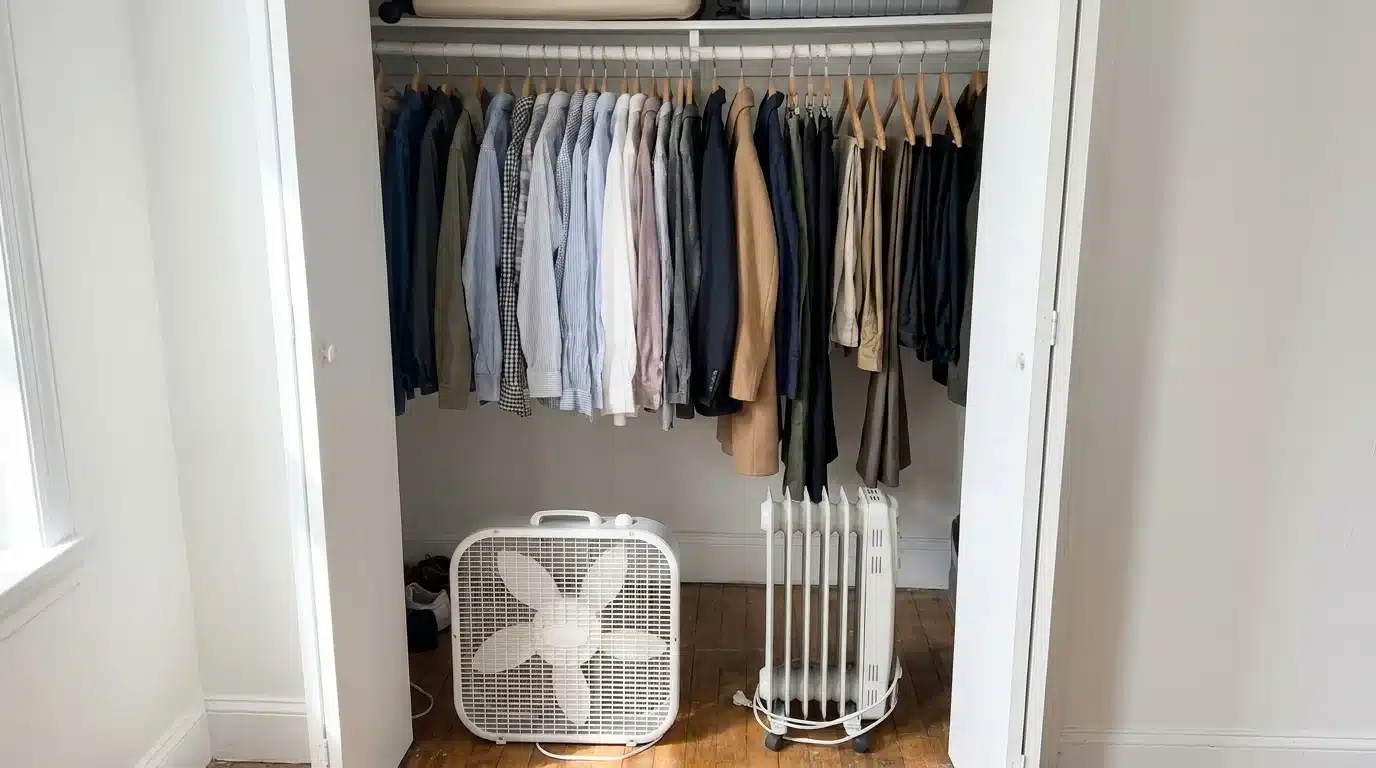
Check each piece before you put it away. Wipe the dust off a fan and bag it, or that dust blows across the room on the first hot day. Empty the vacuum bin. If you own a stick vacuum, keep it where it can charge, because most closets have no outlet.
A space heater goes in the closet only when it is unplugged and cool. Never run one in there. The Consumer Product Safety Commission advises keeping heaters at least 3 feet from bedding, drapes and furniture, and a closet full of coats is the opposite of that. In winter it needs its own clear spot in the room, so plan for that before you give the closet space away.
Original boxes protect things but take noticeably more room. I would keep the box for a heater you move often and recycle the rest.
What about bikes, skis and other sports gear?
Start by asking whether your building has a bike room or a locker, since many renters never check. If not, a floor-to-ceiling tension-pole rack holds a bike upright with no wall screws. Read its ceiling and load limits first, and put a mat under the tires. Wall hooks need a stud and your landlord’s agreement.
Skis and snowboards stand well in a closet corner, in a bag, once they are completely dry. Camping gear can live inside a suitcase, apart from a down sleeping bag, which should stay loose. It is also worth asking your local bike or ski shop whether it stores gear off-season, before you give up closet space for something you use in only one season.
When is a storage unit actually worth it?
A unit should be the last resort for storage for bulky items in a small apartment. It is worth the money when you have a real plan for what goes in it, and a poor deal when it is a place to postpone decisions. Get an actual quote, multiply it by twelve and compare that with what it would cost to replace everything you would put inside.
- Worth it: furniture between two leases, with an end date in mind. Gear you use often but cannot fit, such as bikes for a family. Things you truly cannot replace and have no room for.
- Not worth it: boxes you have not opened in two years. Cheap furniture you could buy again for less than a year of rent. Anything you will not make the trip to fetch.
| Unit | Floor area | Roughly holds |
|---|---|---|
| 5 x 5 ft | 25 sq ft | Boxes, seasonal clothes and small items. U-Haul warns that large items will not fit. |
| 5 x 10 ft | 50 sq ft | A couch, a queen mattress, a dresser, bikes and boxes: about a studio’s contents, per U-Haul’s guide. |
Before you sign, ask three questions. Is it climate controlled? That matters for down, leather and wood. What are the access hours? And what does your renters insurance cover off-site? Many policies limit stored belongings to around 10 percent of your personal property coverage, and some states and policies work differently, so ask your agent for the figure in writing.
If the problem is really about the seasons, try a twice-yearly swap before you pay anyone. It often frees more space than people expect.
Quick answers about bulky storage
Can I keep comforters in a basement storage locker?
Only if it stays dry. The EPA suggests indoor humidity below 60 percent, ideally 30 to 50, and many basements run higher. Use a lidded plastic bin on a shelf or pallet, not on the floor, and do not keep down there for long.
Are plastic bins or fabric bags better for bulky blankets?
Fabric indoors, and especially for down, because it lets the fill breathe. Tight lidded bins suit damp lockers and wool that needs protecting from moths. Skip cardboard, which absorbs moisture and does little to stop insects.
Where do bulky items go with no closet at all?
Buy one tall wardrobe before you buy anything else, because it gives you a rod, a floor and a top. After that, raise the bed for bags underneath and pick a storage ottoman for blankets. Let heavy things stand behind a door or at the end of the sofa, where they stay out of the walkway.
How do I store a vacuum if I have nowhere to hide it?
Behind a door that opens fully against a wall, or at the end of a wardrobe. A slim stick vacuum on a freestanding stand can also sit near an outlet with no drilling at all, which suits most leases.